
Finding a haircut you love after 60 doesn’t mean following a new set of rules. You might want something short and easy to style, a bob with a little more movement, or longer hair that still feels like you. The best choice depends on your hair’s texture, how much time you want to spend styling it, and the look that makes you feel comfortable and confident.
Hair can change over time. Some women notice finer strands or less volume, while others find that their hair becomes drier, coarser, curlier, or more resistant to styling. These changes can influence how a haircut sits and how much maintenance it needs.
The good news is that there are plenty of options. From textured pixies and layered bobs to soft shags and longer styles, you can find a haircut that works with your natural hair rather than fighting against it.
In this guide, we’ll look at flattering haircut ideas for women over 60, explain what to consider before choosing a style, and share practical tips to make everyday styling easier.
Why Your Haircut Matters After 60
A good haircut should fit your life as well as your appearance. You may prefer a style that needs very little attention in the morning, or you might enjoy using a round brush and styling products to create a more polished finish.
Hair texture and density are worth considering before making a change. Fine hair can sometimes look fuller with a well-shaped, relatively solid outline, while thick hair may benefit from carefully placed layers that remove excess weight. Naturally wavy or curly hair often works best when the cut allows the pattern to move freely.
Your face shape can also help guide your choice, but it shouldn’t be a strict rule. The length you enjoy, your personal style, and the amount of daily maintenance you’re comfortable with matter just as much.
1. The Classic Pixie Cut
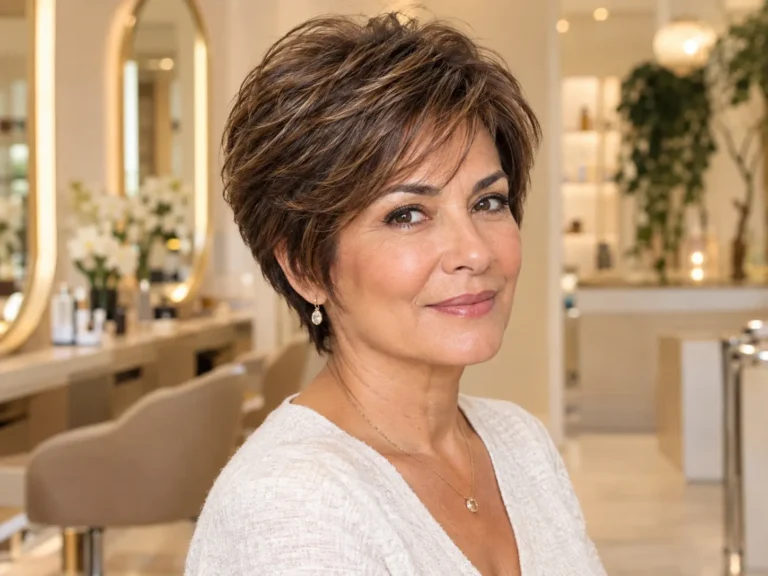
A classic pixie is a practical choice for women who enjoy short hair and want a style with personality. It keeps the sides and back relatively short, while the top can be shaped to suit your hair and preferred finish.
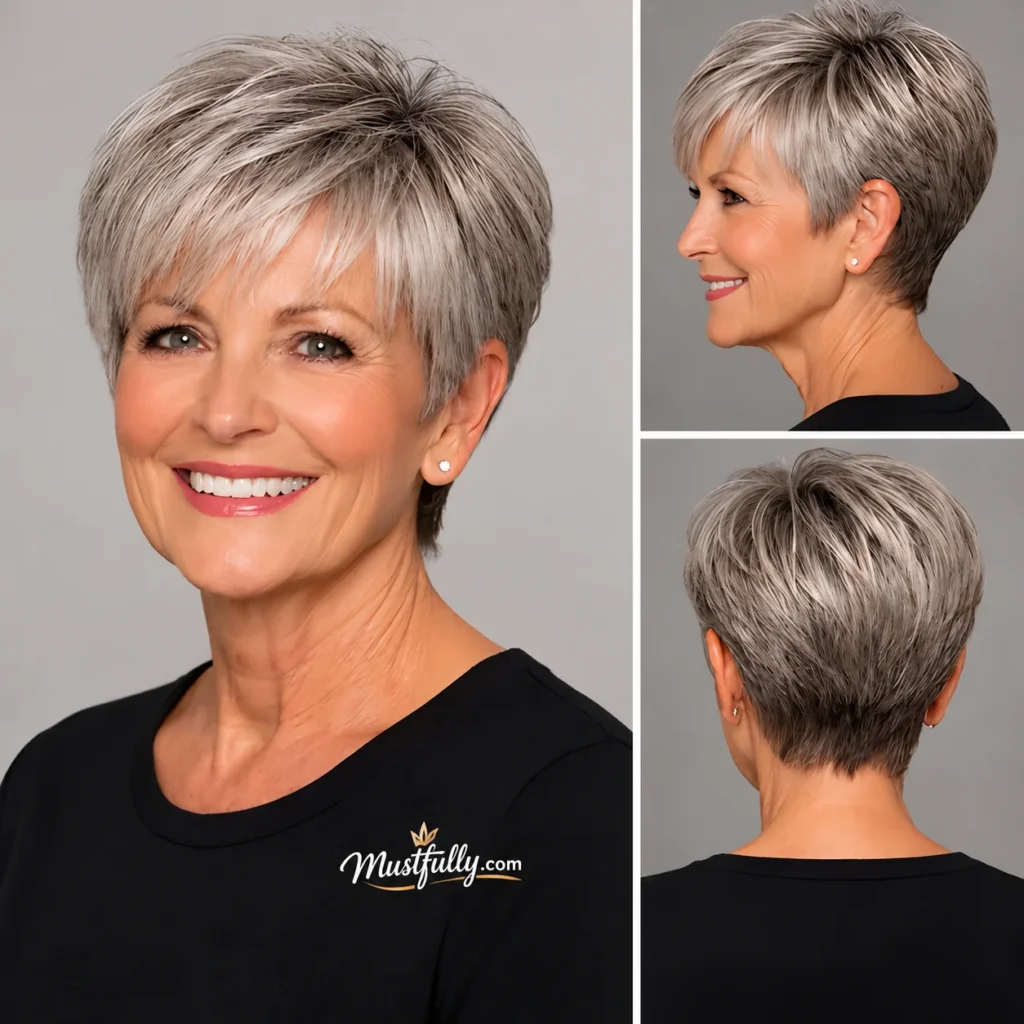
A pixie with a little extra length on top can create movement and make styling more versatile. You can sweep the front to one side, add a few textured pieces, or keep it soft and close to the head.
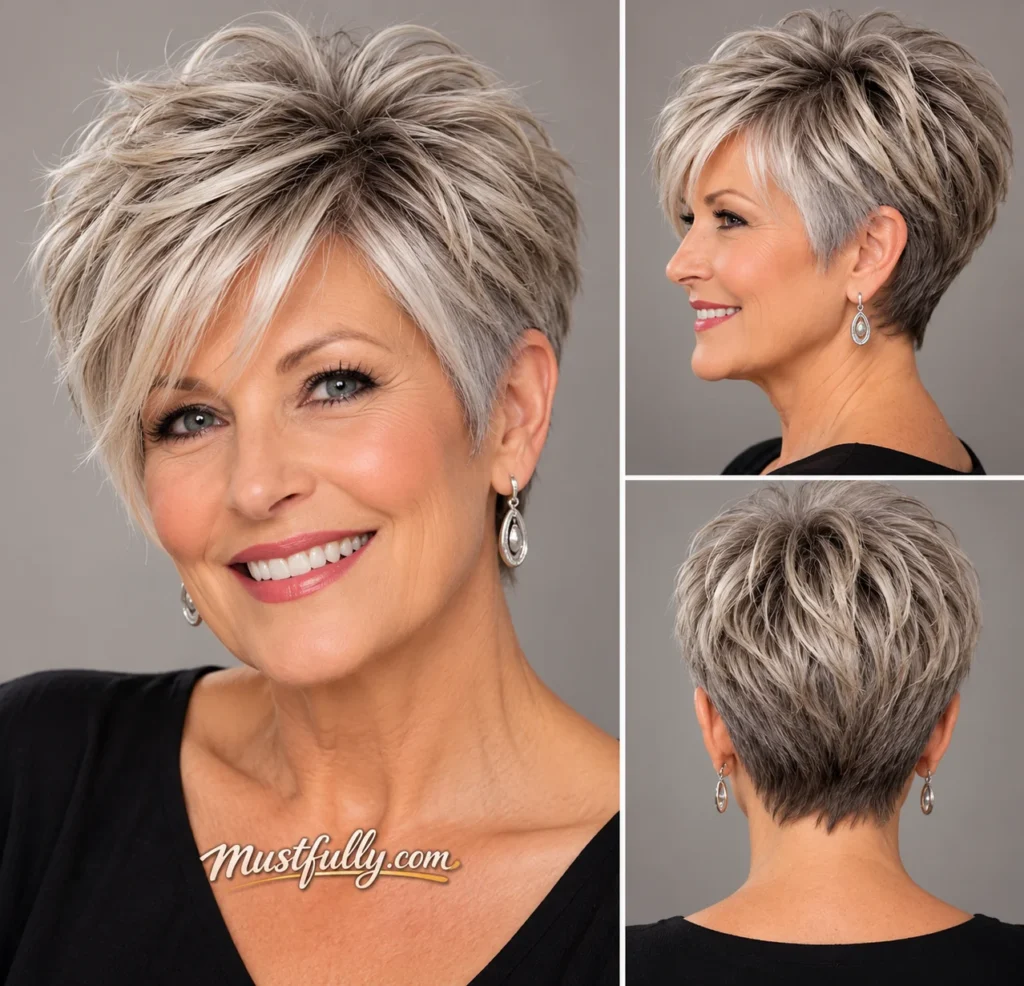
Who might like it?
A pixie may suit women who want less hair to manage and prefer a short, defined shape. It can also work well with fine hair, although the result depends on the haircut and the amount of hair you have. If your hair is very fine, ask your stylist whether too many short layers might make the ends look less full.
Styling tip: Use a small amount of lightweight mousse or styling cream, then shape the top with your fingers. Start with less product than you think you need; heavy formulas can flatten fine hair.
2. The Soft Layered Crop
If you like short hair but want something less dramatic than a traditional pixie, consider a soft layered crop. It keeps the overall length short while leaving enough movement around the crown and sides to create a gentler shape.
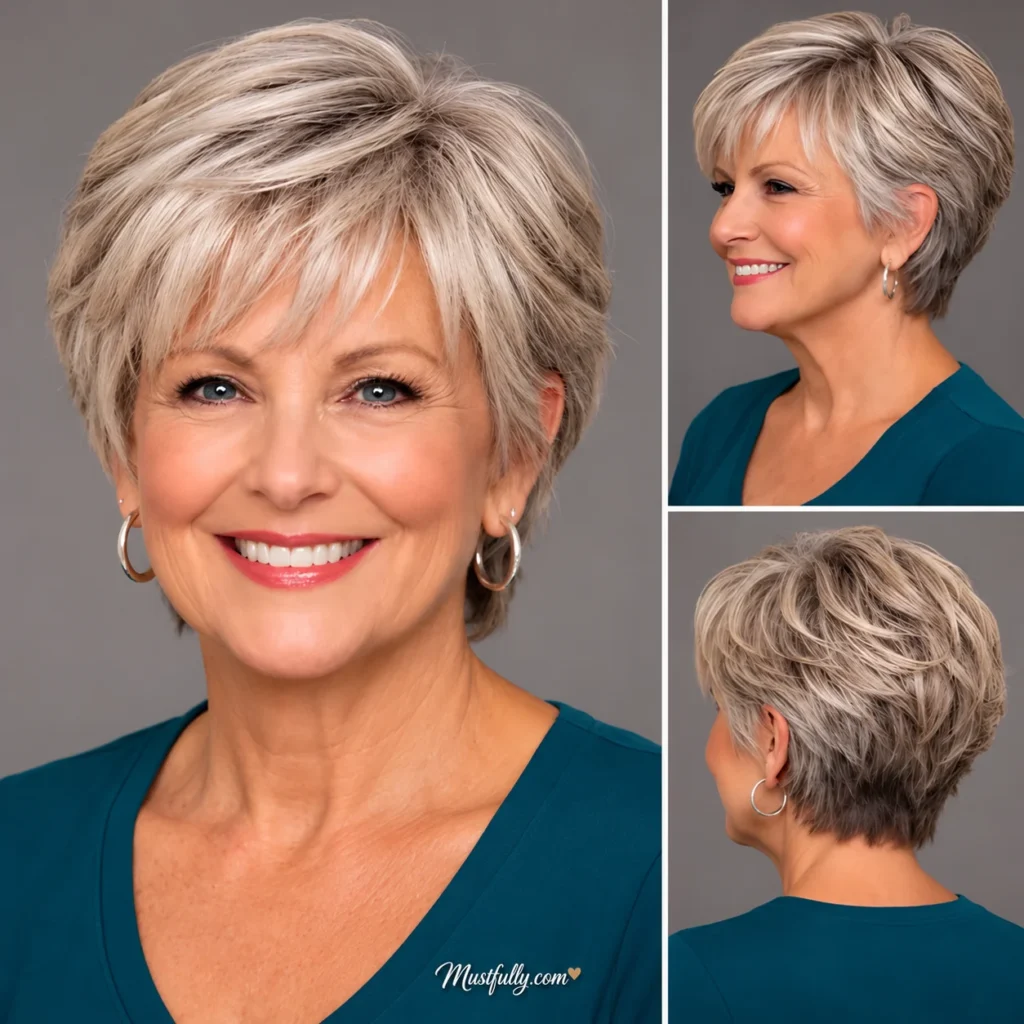
The layers can be subtle rather than choppy. This makes the cut a useful option for women who want texture without an overly edgy finish.
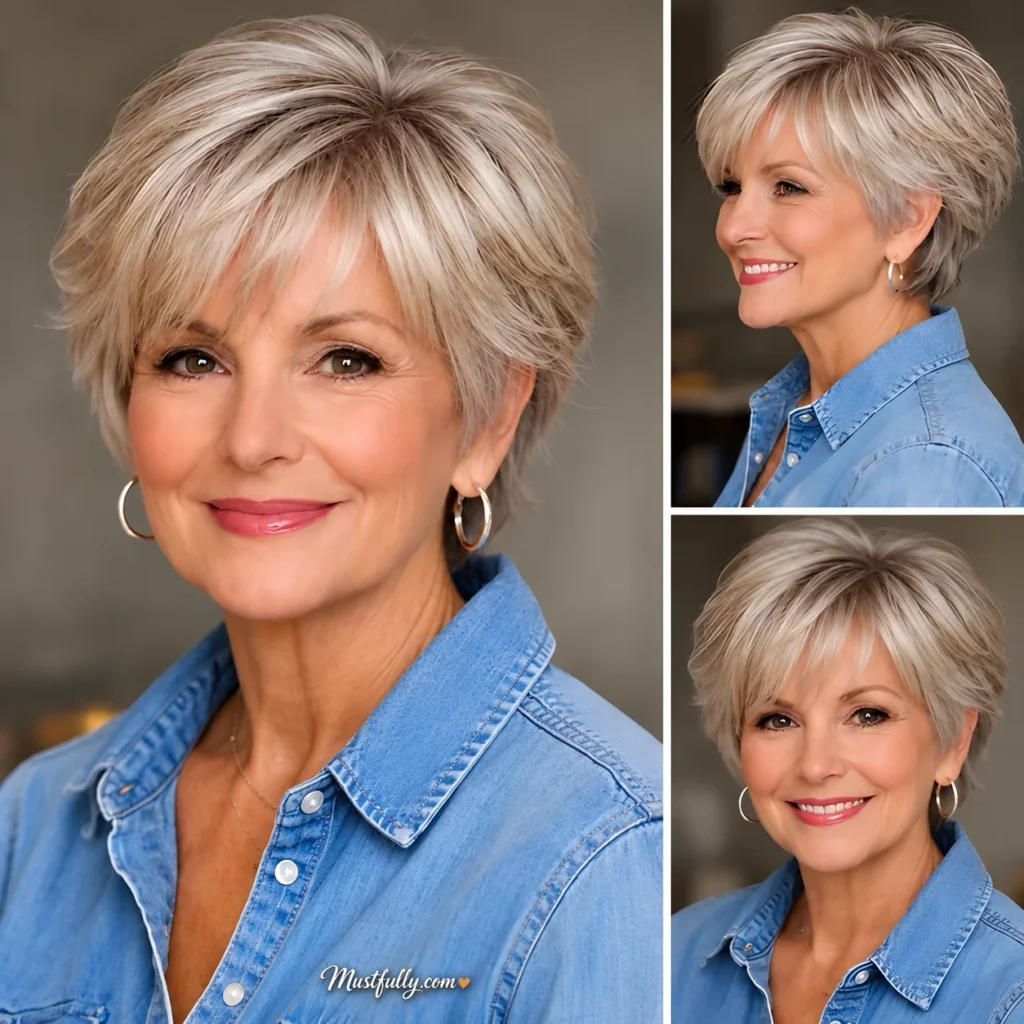
A soft crop can look particularly attractive with natural silver or gray hair because the movement helps show the different tones in the hair. It can also work with blonde, brunette, or highlighted hair.
Styling tip: Ask your stylist to show you how the cut looks when air-dried as well as when blow-dried. This helps you understand how much work it will need on an ordinary day.
3. The Classic or Layered Bob
The bob remains a versatile choice because it can be adapted to different lengths and hair textures. A chin-length bob creates a clear outline, while a slightly longer version gives you more room to tuck the hair behind your ears or style it with a soft bend.
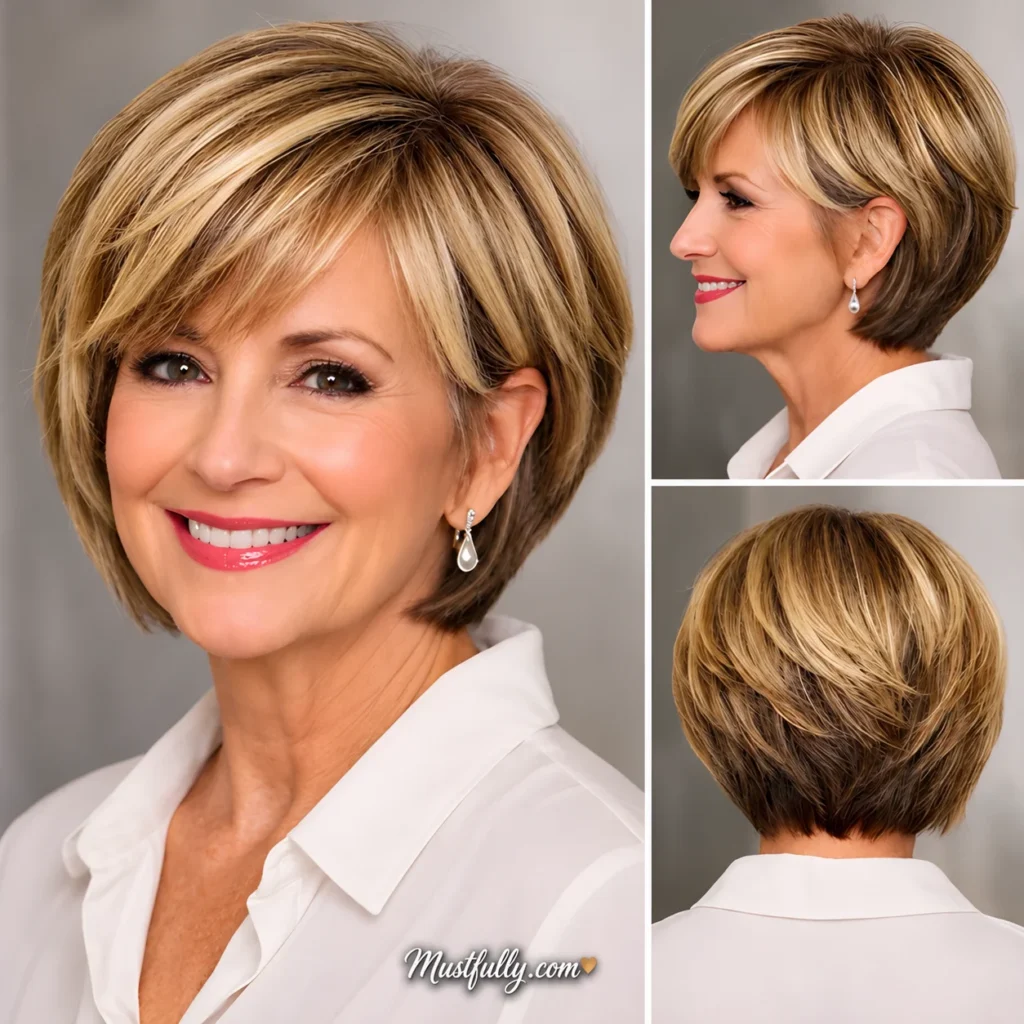
A bob with subtle layers can add movement around the face. If your hair is fine, a shape that keeps some weight around the perimeter may help the ends look fuller. If your hair is thick, carefully placed layers can reduce bulk without making the haircut feel uneven.
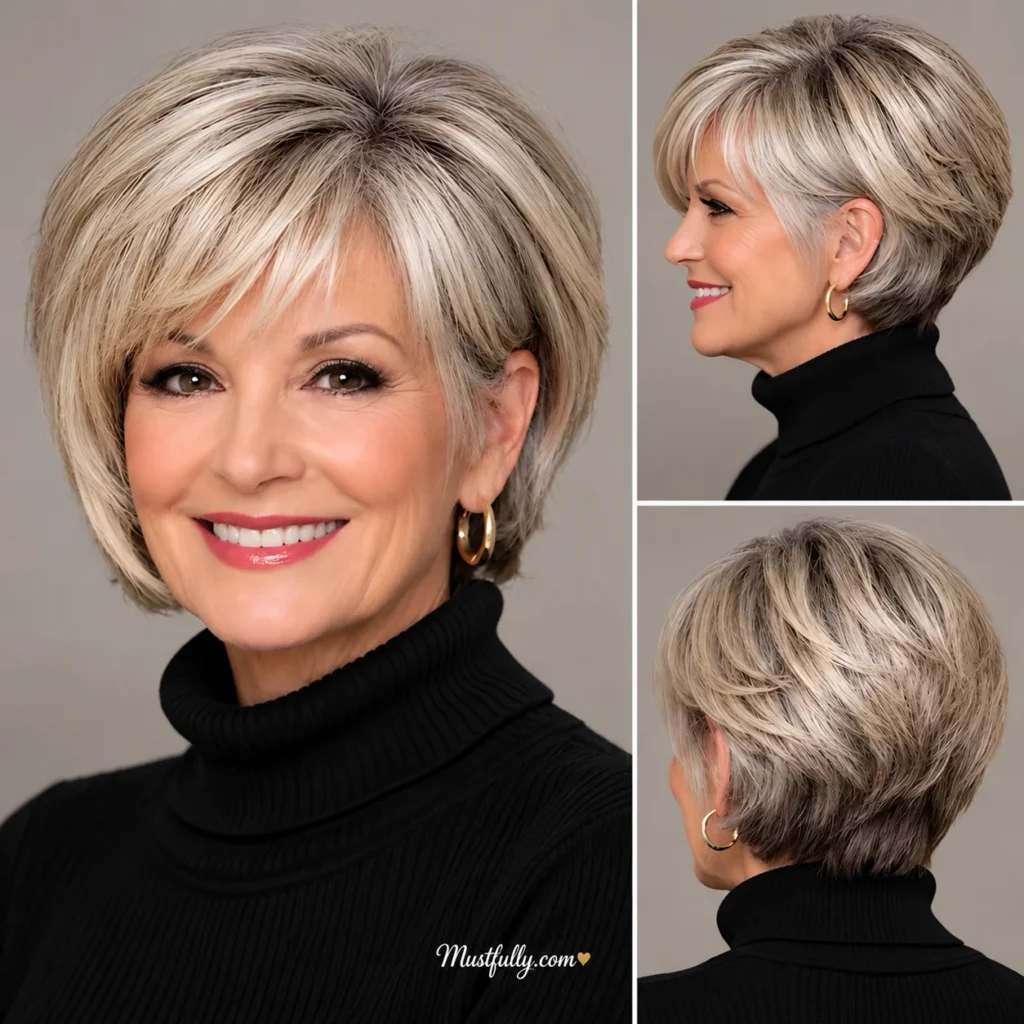
You can wear a bob sleek and smooth, add gentle waves, or choose a side part for a different look without changing the length.
Who might like it?
A bob is worth considering if you want a polished style that isn’t as short as a pixie. The right length depends on your hair’s natural behavior and the shape you want around your jaw and neck.
For more ideas, see our guide to stylish haircuts for women over 50. It includes additional haircut inspiration that may help you compare different shapes.
4. The Long Bob (Lob)
The long bob, often called a lob, usually falls somewhere between the chin and the shoulders. It offers more length than a traditional bob while still feeling manageable for many women.
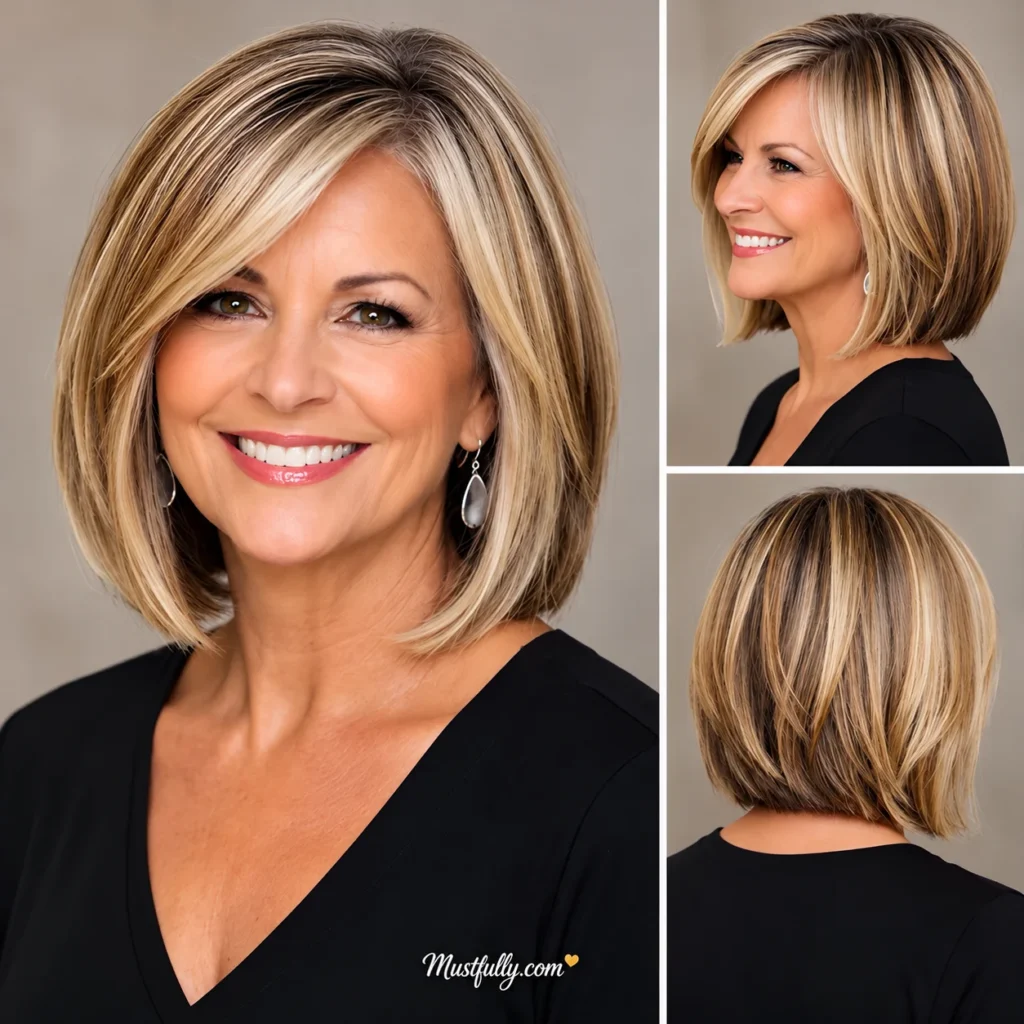
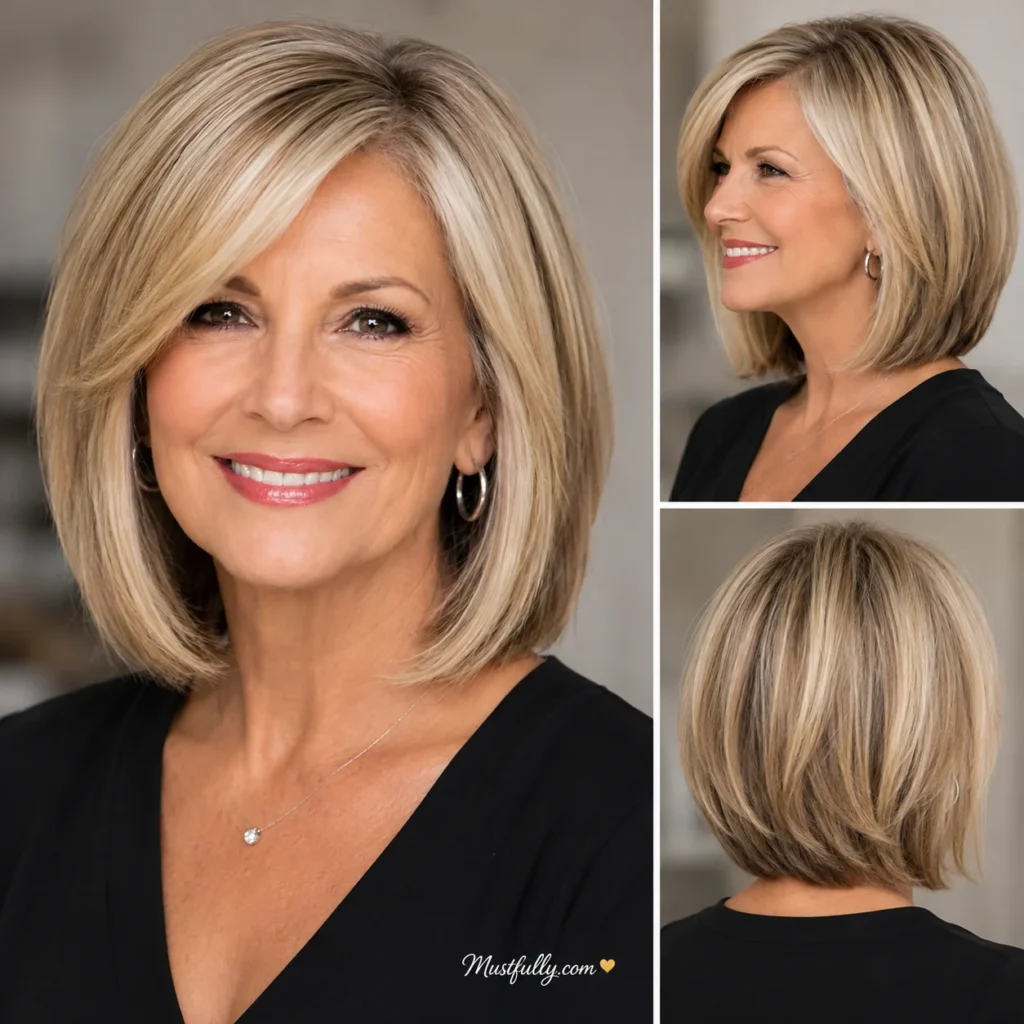
A lob can be worn straight, with loose waves, or with light face-framing layers. If you prefer to tie your hair back occasionally, this length may also offer more flexibility than a shorter cut.
For fine hair, ask about a shape that preserves enough fullness at the ends. For thick or wavy hair, a stylist may recommend subtle layers to help the cut sit comfortably without becoming too bulky.
Styling tip: A little leave-in conditioner can help with dryness and frizz. If you use heat tools, choose a heat protectant and avoid using a higher temperature than necessary.
5. The Modern Shag
A modern shag uses layers throughout the hair to create a relaxed, textured finish. Depending on the version, it may include a fringe, shorter pieces around the crown, and softer layers that frame the face.
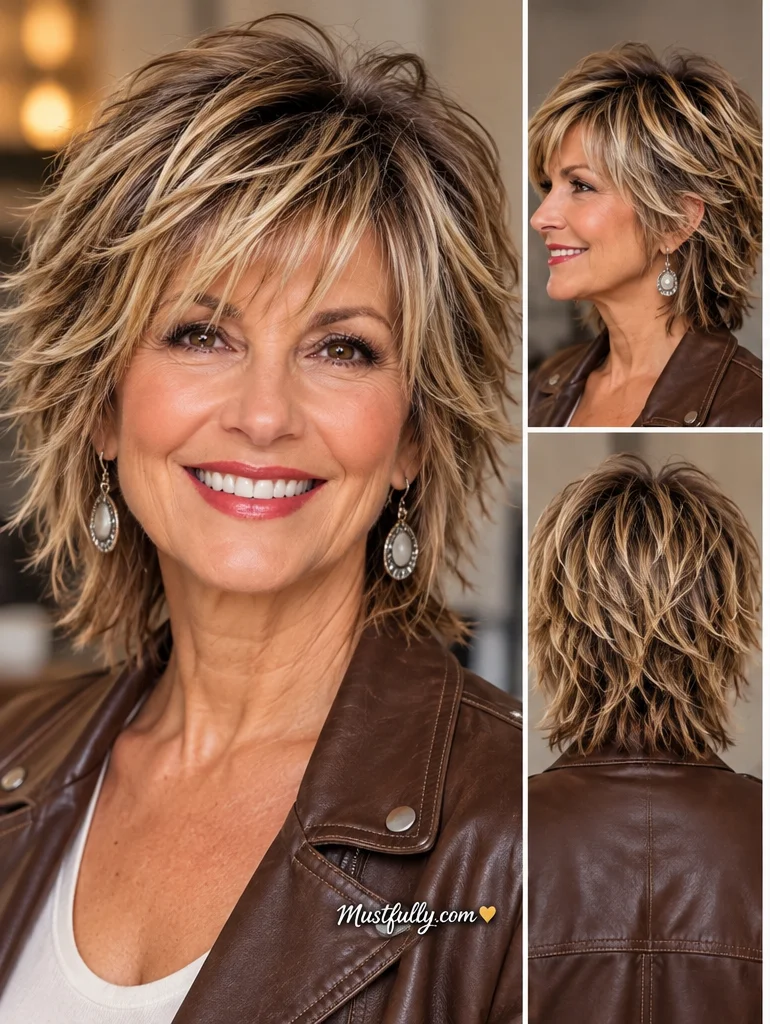
This style can be a good option for women with natural waves who enjoy movement rather than a perfectly smooth finish. It can also be adapted for straight hair, although the amount of layering should be chosen carefully if your hair is fine or sparse.
A shag isn’t automatically low-maintenance. The right cut should work with your natural texture, but some versions need styling to keep the layers sitting as intended.
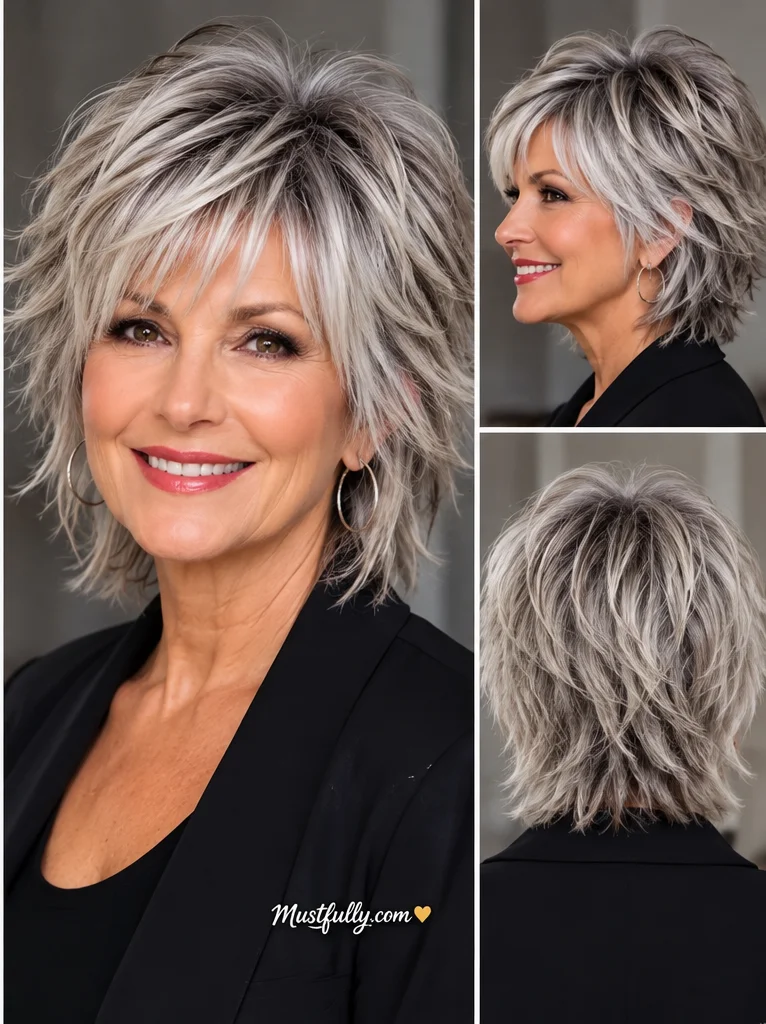
Styling tip: If your hair is wavy, try applying a lightweight styling product to damp hair and allowing it to dry naturally. Avoid brushing it repeatedly while dry if that makes your waves frizzy.
6. Long Layers for Women Who Love Their Length
There is no rule that says women over 60 must cut their hair short. If you enjoy longer hair, you can keep it and adjust the shape to suit its current texture and condition.
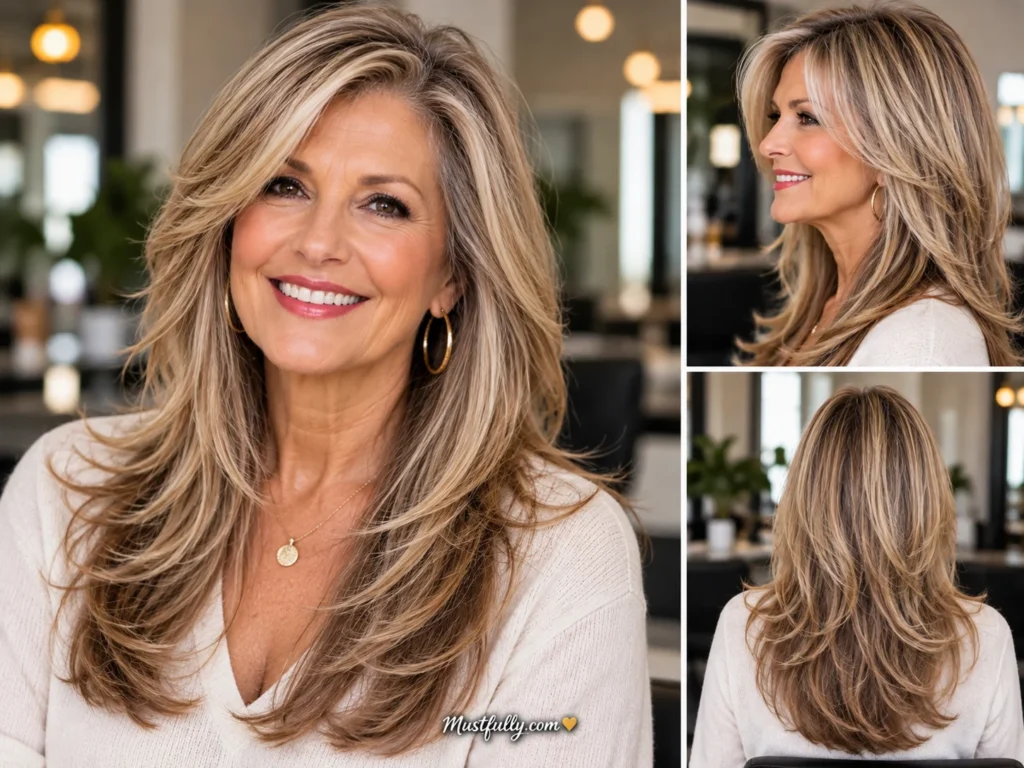
Long layers can add movement and help thick hair feel less heavy. Face-framing pieces can soften the transition between the hair and the face without requiring a major change in length.
If your hair is fine or thinning, however, too many layers may make the ends look wispy. In that case, a more subtle approach may help preserve the appearance of fullness.
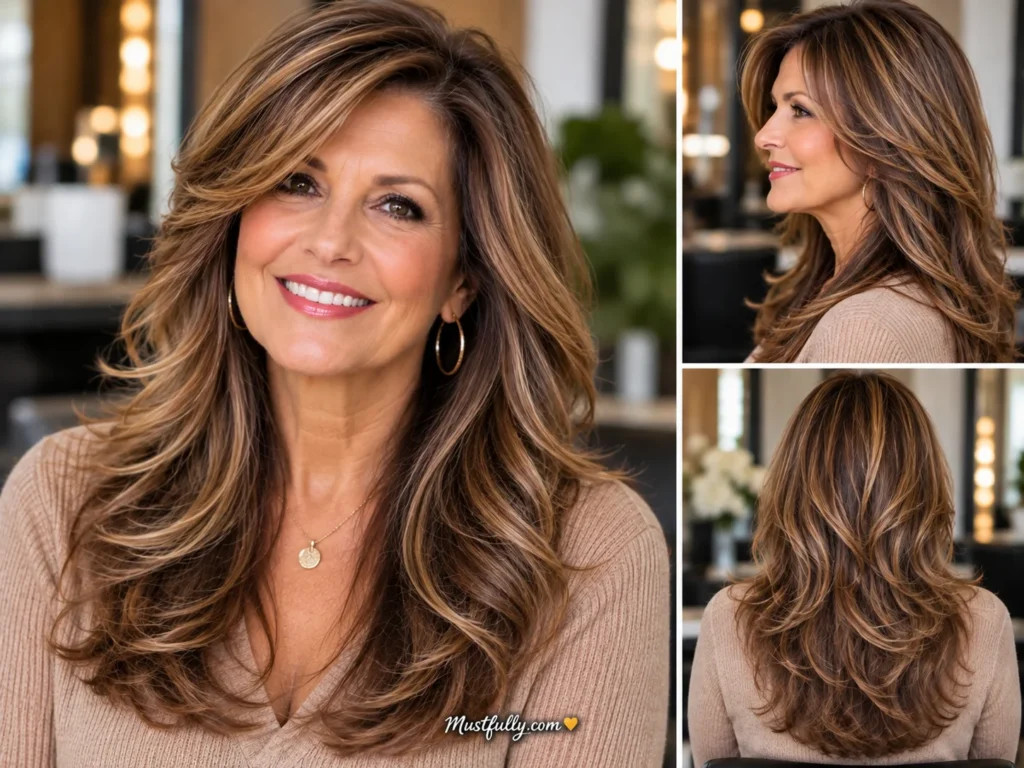
Long hair also benefits from gentle handling. Use conditioner on the lengths, detangle carefully, and trim the ends when needed to maintain the shape.
Styling tip: Try loose waves or a simple blowout with a round brush if you want extra movement. You don’t need to style every strand; a little shape around the front can be enough.
7. Face-Framing Layers
Face-framing layers are shorter pieces around the front that blend into the rest of the haircut. They can be added to a bob, lob, or longer style, making them an option for women who don’t want to lose much length.
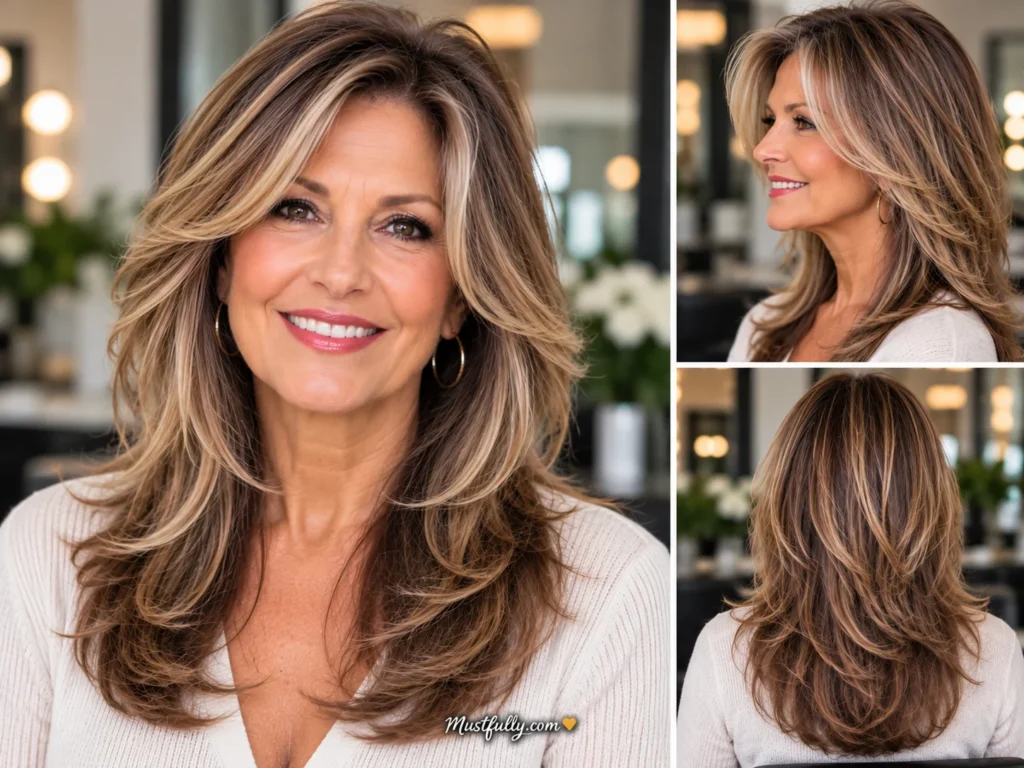
The starting point of the layers makes a difference. Pieces beginning near the cheekbones create a different effect from layers that start near the chin or collarbone. Your stylist can help you choose a placement that works with your preferred parting and the way you wear your hair.
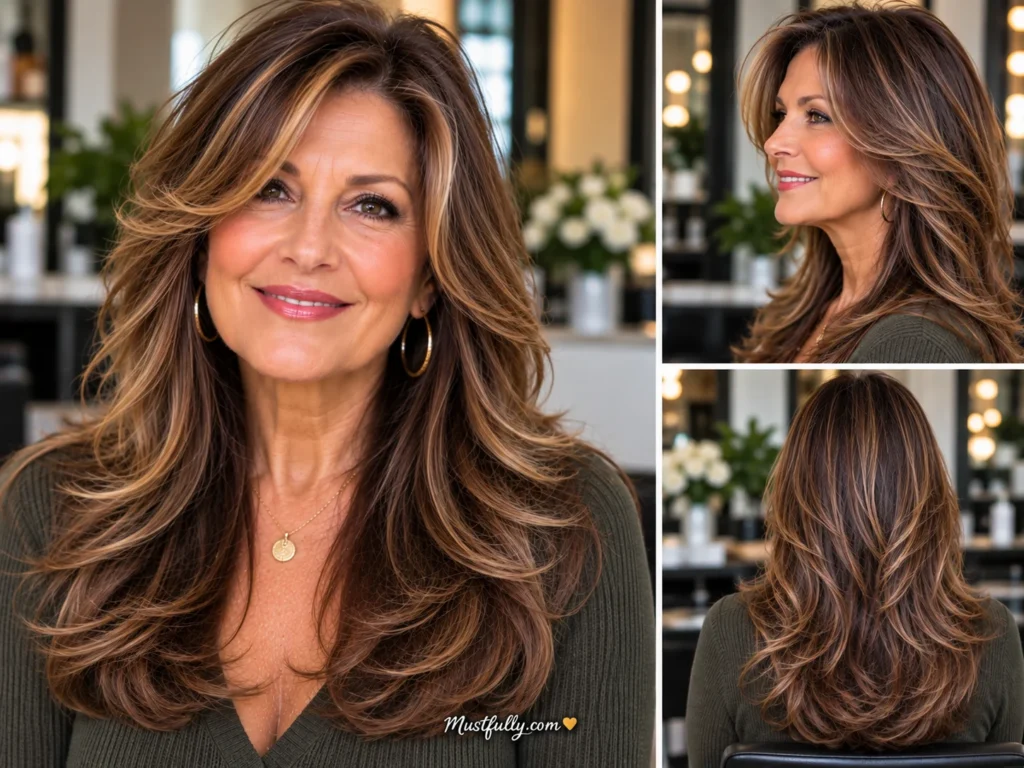
Face-framing layers can also be useful if you like to tie your hair back but want a few soft pieces around the face when it’s loose.
Styling tip: Ask your stylist to show you how the shorter pieces will look when tucked behind your ears and when left loose. That way, you can choose a shape that works for both options.
8. Side-Swept Bangs
Side-swept bangs blend diagonally into the rest of the haircut. They can add movement around the forehead and work with pixies, bobs, lobs, and longer layers.
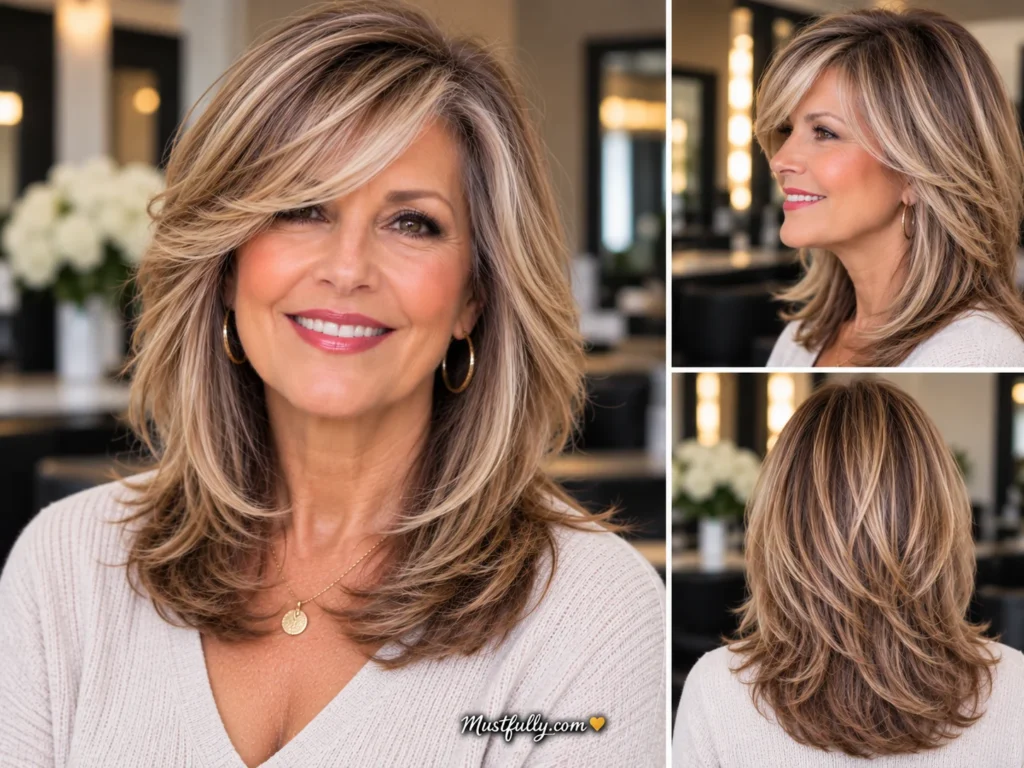
They’re worth considering if you like the idea of a fringe but don’t want a straight line across the forehead. The length can be adjusted according to your hair texture and how much styling you’re willing to do.
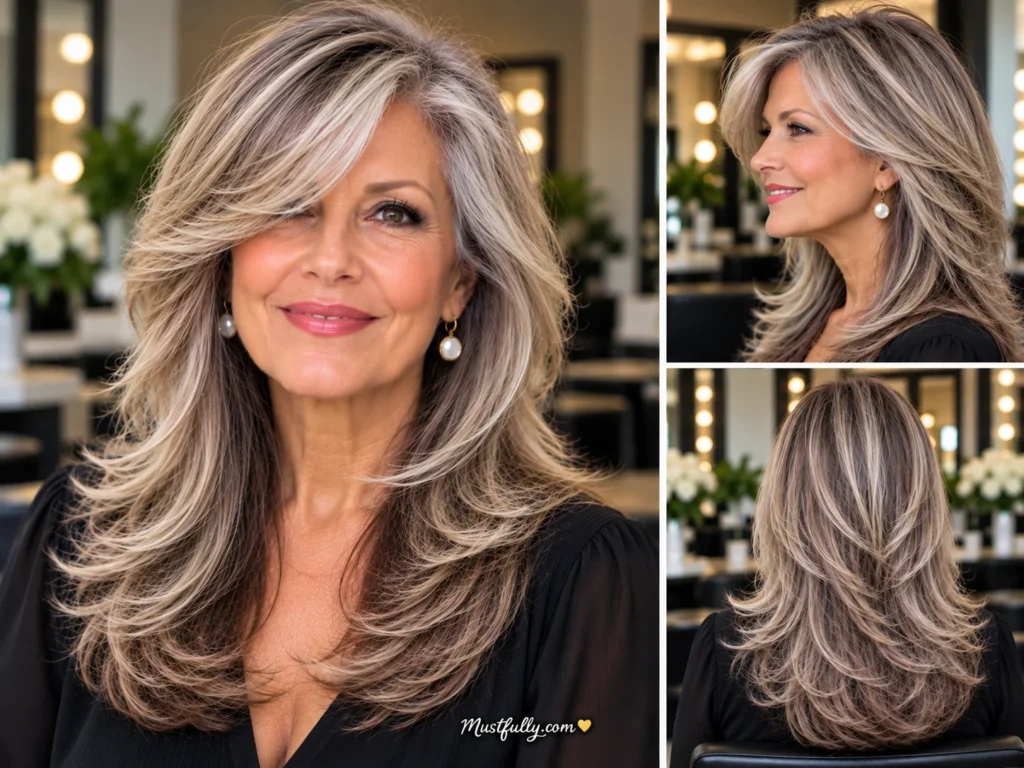
Bangs can require regular trims to maintain their shape. If your hair tends to separate or fall flat at the front, ask your stylist to demonstrate a simple way to style them at home.
9. Soft Curtain Bangs
Curtain bangs part in the middle or slightly off-center and sweep toward the sides. They can be paired with a bob, lob, shag, or longer layered haircut.
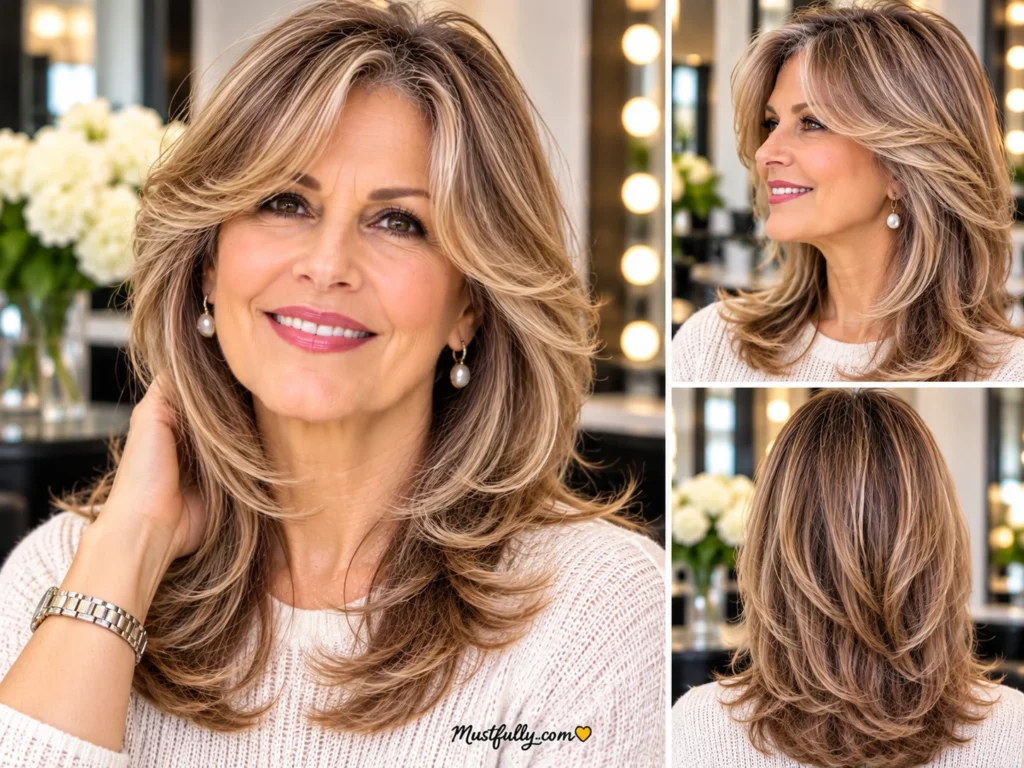
Their main appeal is flexibility. You can wear them softly around the face, sweep them to one side, or let them blend into longer layers as they grow.
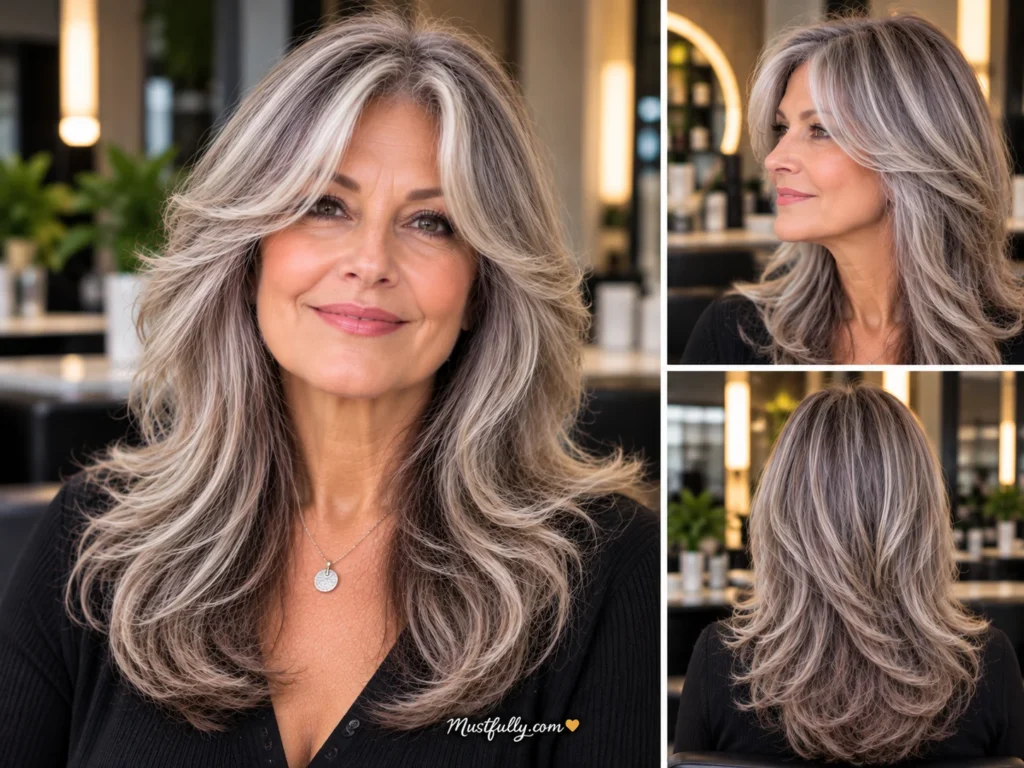
Curtain bangs may need a little styling, particularly if your hair naturally falls forward or has a strong parting. They are not necessarily a wash-and-go option for everyone, so consider your daily routine before choosing them.
Styling tip: Use a round brush to guide the front pieces away from the face, or let them dry naturally if your hair already falls into the desired shape.
How to Choose a Haircut for Your Hair Type
The most flattering haircut is one that works with your hair’s natural texture and density. Before booking an appointment, think about what you want to change and what you want to keep.
If Your Hair Is Fine or Thinning
Consider a bob, a soft crop, or a pixie with carefully placed layers. A clear outline can help the ends look fuller, while too many layers may make fine hair appear more separated.
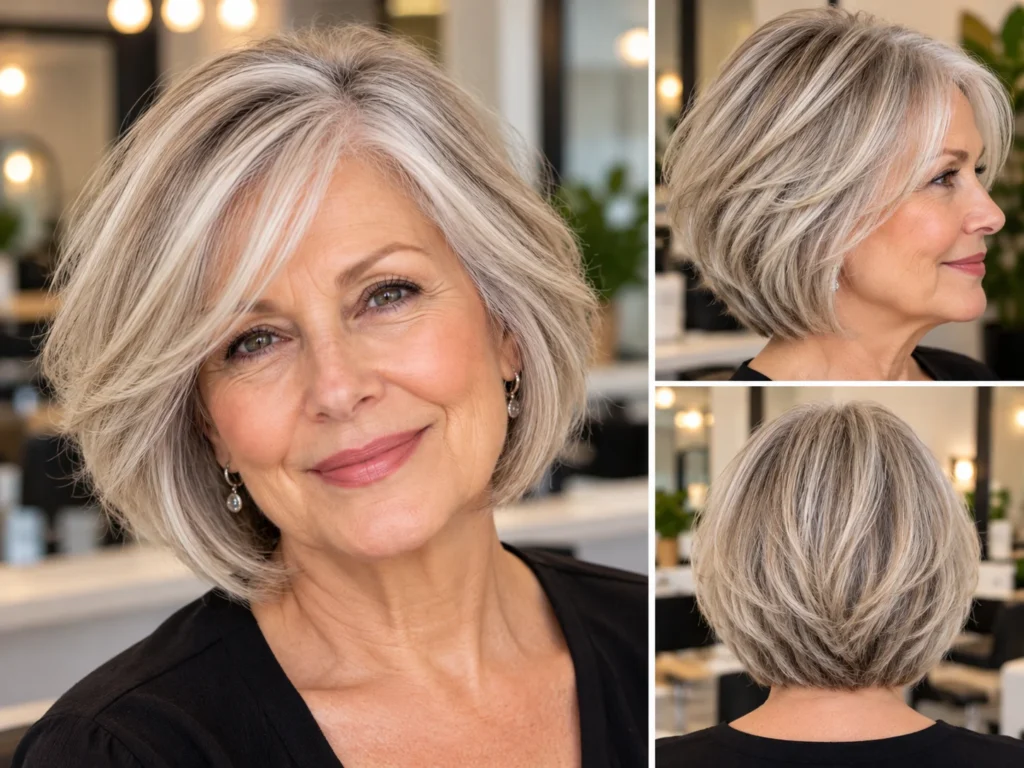
If your hair has become noticeably thinner, explain this to your stylist so they can adapt the shape to your current density. For more specific ideas, read our guide to short haircuts for fine hair over 50.
If Your Hair Is Thick
A layered bob, lob, or shag may help manage bulk while preserving movement. The goal is not simply to remove as much hair as possible; excessive thinning can sometimes make the ends difficult to style.
Ask your stylist where the weight should be removed and how the haircut will sit when it grows out.
If Your Hair Is Naturally Wavy or Curly
Choose a shape that allows your natural pattern to form. A layered lob or a soft shag may work well, depending on the size of your curls and how much volume you prefer.
Curly hair can sit differently when wet and dry, so ask your stylist to explain how the cut will behave once it has dried.
If Your Hair Is Straight
A bob, lob, or long layers can work well, depending on the amount of body and movement you want. If your hair tends to lie flat, subtle shaping or a different parting may help create a little more lift without requiring extensive styling.
Choosing a Haircut for Your Face Shape
Face shape can offer a helpful starting point, but it shouldn’t limit your choices. Two women with similar face shapes may prefer very different hairstyles.
- Round face: If you want a more elongated appearance, consider a side part, a longer bob, or some height at the crown.
- Oval face: Many lengths and shapes can work, so focus on hair texture, personal style, and maintenance.
- Square face: Soft layers, side-swept bangs, or a bob with gentle movement may appeal to you if you prefer to soften the outline around the jaw.
- Heart-shaped face: A chin-length bob, a side part, or layers that add movement near the lower part of the face may help create balance.
Use these suggestions as ideas to discuss with your stylist, not as strict rules. The best result is one you enjoy wearing.
Embracing Natural Gray and Silver Hair
Gray and silver hair can look beautiful with a wide range of cuts, from a short textured pixie to a longer layered style. The right shape can help show off the natural variation in silver, white, and darker strands.
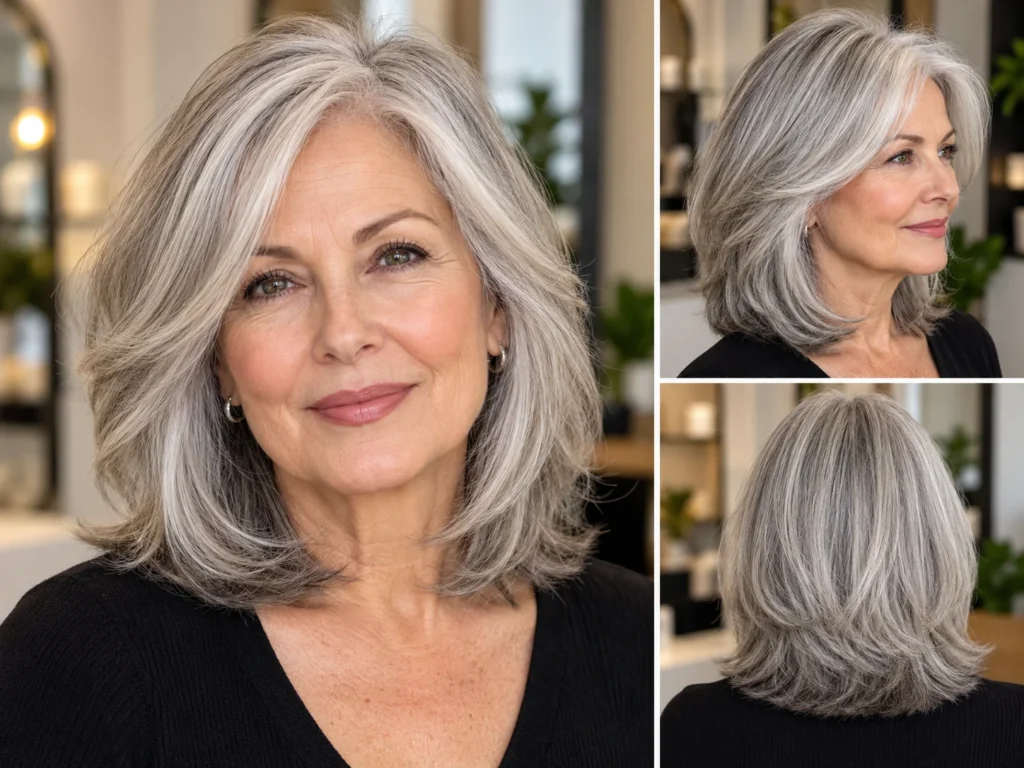
Gray hair can sometimes feel drier or coarser than it used to. A gentle shampoo, a conditioner suited to your hair, and occasional deep conditioning may help improve softness and manageability.
If you prefer to blend your natural gray with your existing color, ask a qualified colorist about options such as highlights or lowlights. The right approach depends on your starting color, hair condition, and how much salon maintenance you want.
You don’t need to color your hair to make a haircut look polished. A well-shaped cut and a care routine that suits your hair can be enough.
Simple Styling Tips for Everyday Wear
A haircut should make your routine easier, not give you another long list of tasks. A few small adjustments can make styling more manageable.
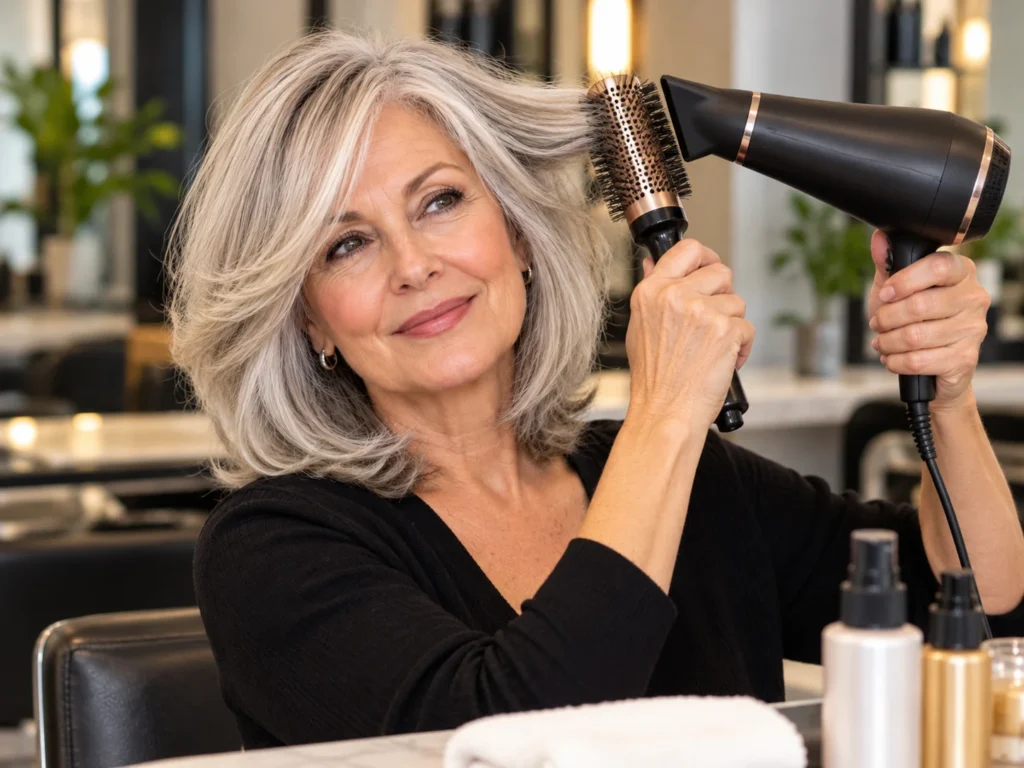
Choose Lightweight Products
Fine hair may lose volume when heavy creams or oils are applied near the roots. Try a small amount of lightweight mousse or styling spray, and add more only if needed.
If your hair is coarse, curly, or dry, a richer conditioner or leave-in product may be more helpful. Choose products according to your hair’s needs rather than its length alone.
Be Gentle When Detangling
Start at the ends and work upward, using a suitable comb or brush. Avoid pulling through knots, especially when your hair is wet and more prone to stretching or breakage.
Use Heat Carefully
If you blow-dry or use a curling iron, apply a heat protectant and use a moderate setting. Letting your hair air-dry when practical can reduce the amount of heat it receives.
Keep Up With Trims
How often you need a trim depends on the haircut and how quickly it loses its shape. Short, structured cuts may need more frequent salon visits than longer styles. Ask your stylist for a realistic schedule based on the look you want to maintain.
Common Haircut Mistakes to Avoid
A few common problems can make a new haircut less satisfying than expected.
Choosing a style without considering daily maintenance. A haircut that looks wonderful after a salon blowout may require more effort than you want to spend every morning. Ask how the style will look when dried at home.
Adding too many layers to fine hair. Layers can create movement, but excessive layering may make the ends appear thin. Discuss how much fullness you want to preserve.
Assuming short hair is always easier. Short styles can be convenient, but some require regular trims and daily shaping. Choose a length that fits both your styling habits and your salon schedule.
Following a trend that doesn’t feel like you. A popular haircut isn’t automatically the right one for everyone. Use trend photos as inspiration, then adapt the shape to your hair and preferences.
Not explaining what you dislike about your current cut. If your hair falls flat at the crown, flips out at the ends, or takes too long to style, tell your stylist. Specific examples are more helpful than simply asking for a completely different look.
What to Ask Your Hairstylist
Taking a few reference photos to your appointment can make it easier to explain what you want. Choose images that show the haircut from more than one angle when possible.
You might ask:
- Will this cut work with my natural texture and hair density?
- How much daily styling will it need?
- Will it still look good as it grows out?
- Can we keep more fullness at the ends?
- What products, if any, would help me recreate the style at home?
- How often will I need a trim to maintain the shape?
A good consultation should help you understand both the look and the upkeep before you commit to a change.
Frequently Asked Questions
What is the easiest haircut to maintain after 60?
A short pixie, a soft crop, or a simple bob may be convenient for some women, but maintenance depends on the exact cut and your hair’s natural behavior. Very short styles often need regular trims, while some longer cuts can be easier to grow out.
Is short hair better for women over 60?
No. Short, medium, and long hair can all look attractive at any age. Choose a length that suits your hair condition, personal taste, and everyday routine.
What haircut can make fine hair look fuller?
A bob with a relatively solid outline or a carefully shaped short cut may help fine hair appear fuller. The best choice depends on your density, texture, and preferred length. Too many layers can sometimes make the ends look thinner.
Can women over 60 wear bangs?
Yes. Side-swept, wispy, and curtain bangs can be adapted to many haircuts. Consider how your hair grows, how much styling the fringe needs, and whether you are comfortable with regular trims.
How can I make gray hair look polished?
A well-maintained haircut, gentle conditioning, and a styling routine suited to your texture can help. If you want to adjust the tone or blend gray with another color, discuss suitable options with a colorist.
Final Thoughts
The best haircut after 60 is not determined by a number. It’s the one that works with your hair, fits your routine, and feels right when you look in the mirror.
A pixie can be practical and expressive, a bob can offer structure without losing versatility, and longer layers can preserve the length you enjoy. There is no need to choose a style simply because someone says it’s appropriate for your age.
Start by thinking about what you want your hair to do for you: feel fuller, take less time to style, show off your natural silver, or keep the length you love. Bring a few reference photos to your stylist and discuss what will work with your hair’s current texture and condition.
With a thoughtful cut and a realistic care routine, you can find a style that feels comfortable, modern, and genuinely your own.