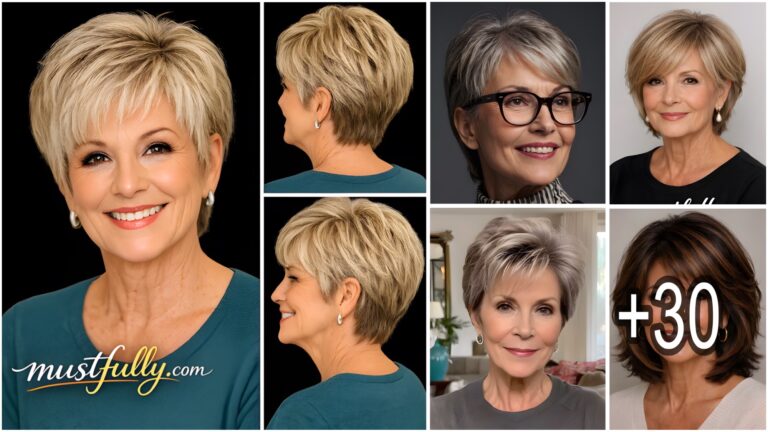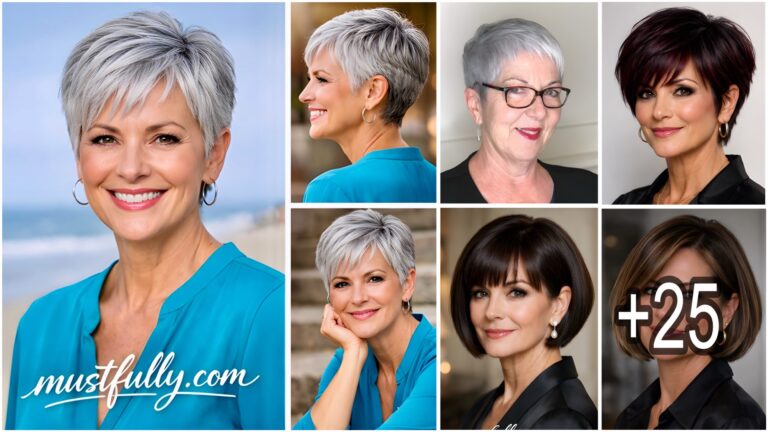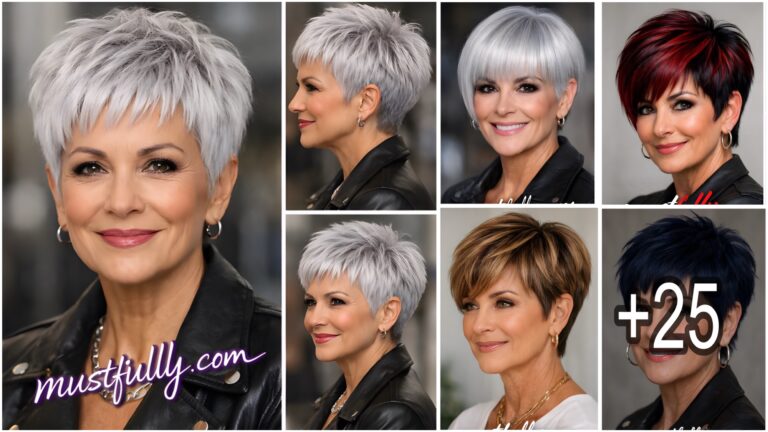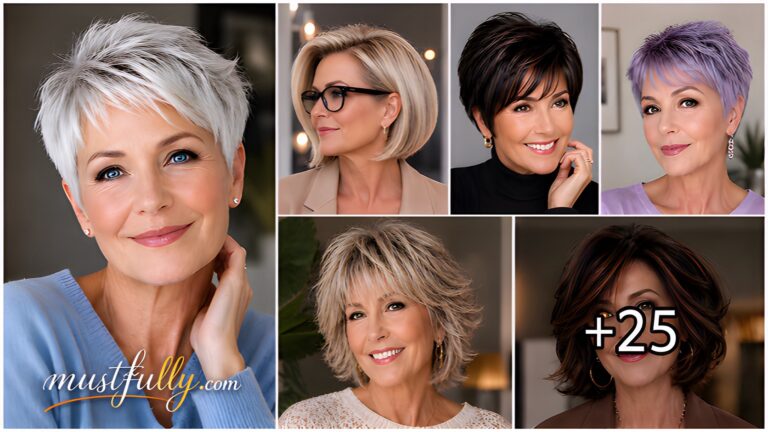
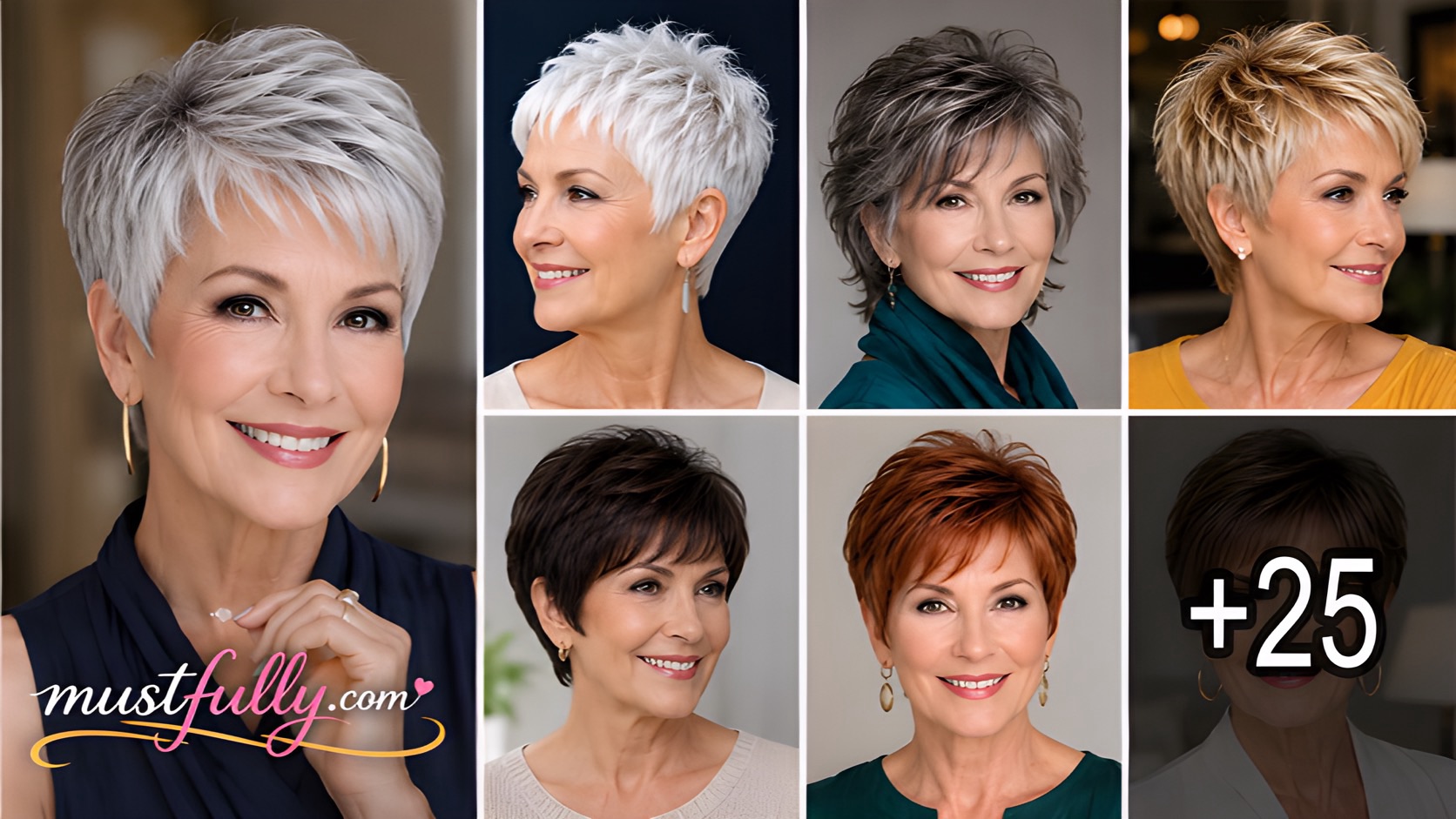

A pixie cut is more than just a haircut; it is a profound statement of confidence, liberation, and timeless style. For women over the age of 50, transitioning to a shorter length often feels like shedding an old skin, revealing a more vibrant and energetic version of oneself. However, the cut is only half of the equation. To truly make a pixie “pop,” the color must be harmonized with your skin tone, eye color, and lifestyle. Choosing the right shade can act like an instant facelift, brightening the complexion and masking thinning areas, while the wrong shade can unintentionally highlight fine lines or make the hair appear sparse. In this comprehensive guide, we delve deep into the artistry of hair color for the modern woman over 50, ensuring your short crop looks sophisticated, modern, and uniquely you.
Understanding the Relationship Between Short Hair and Color Depth
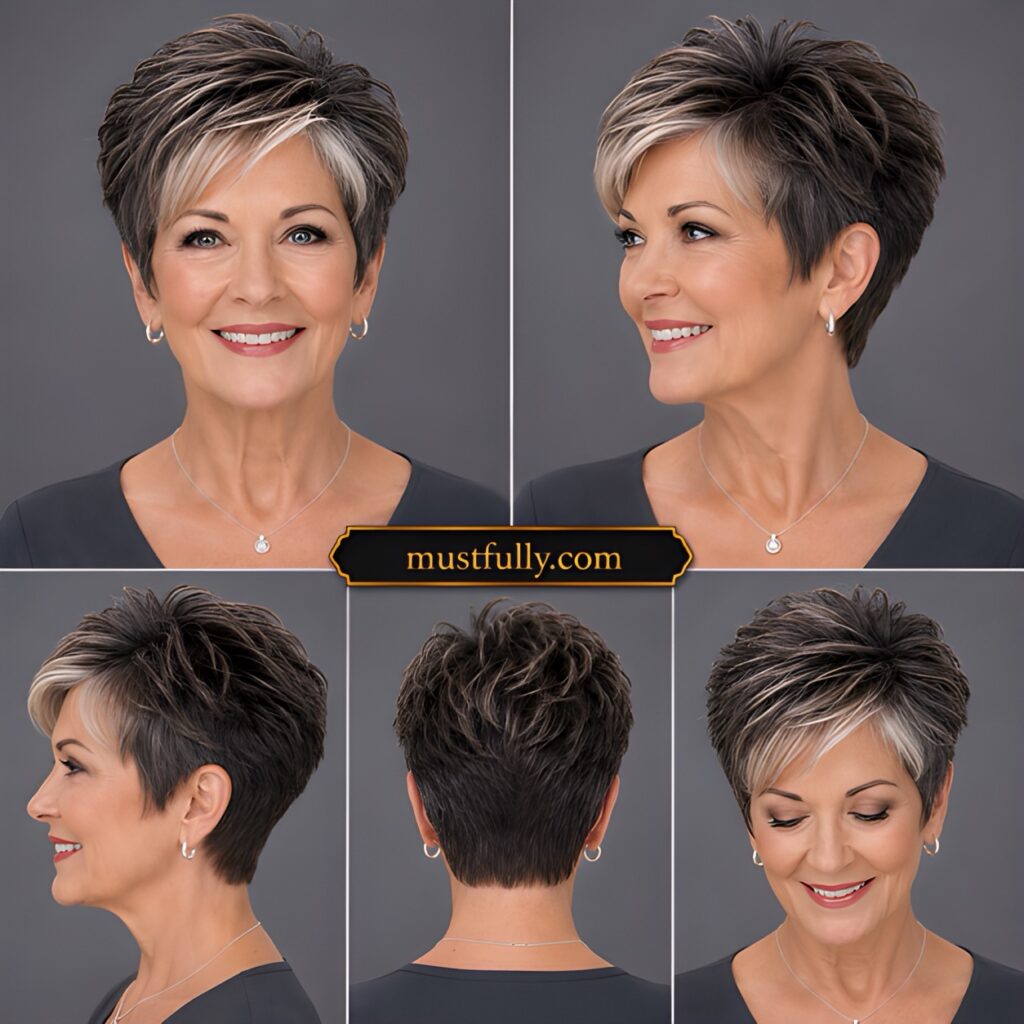
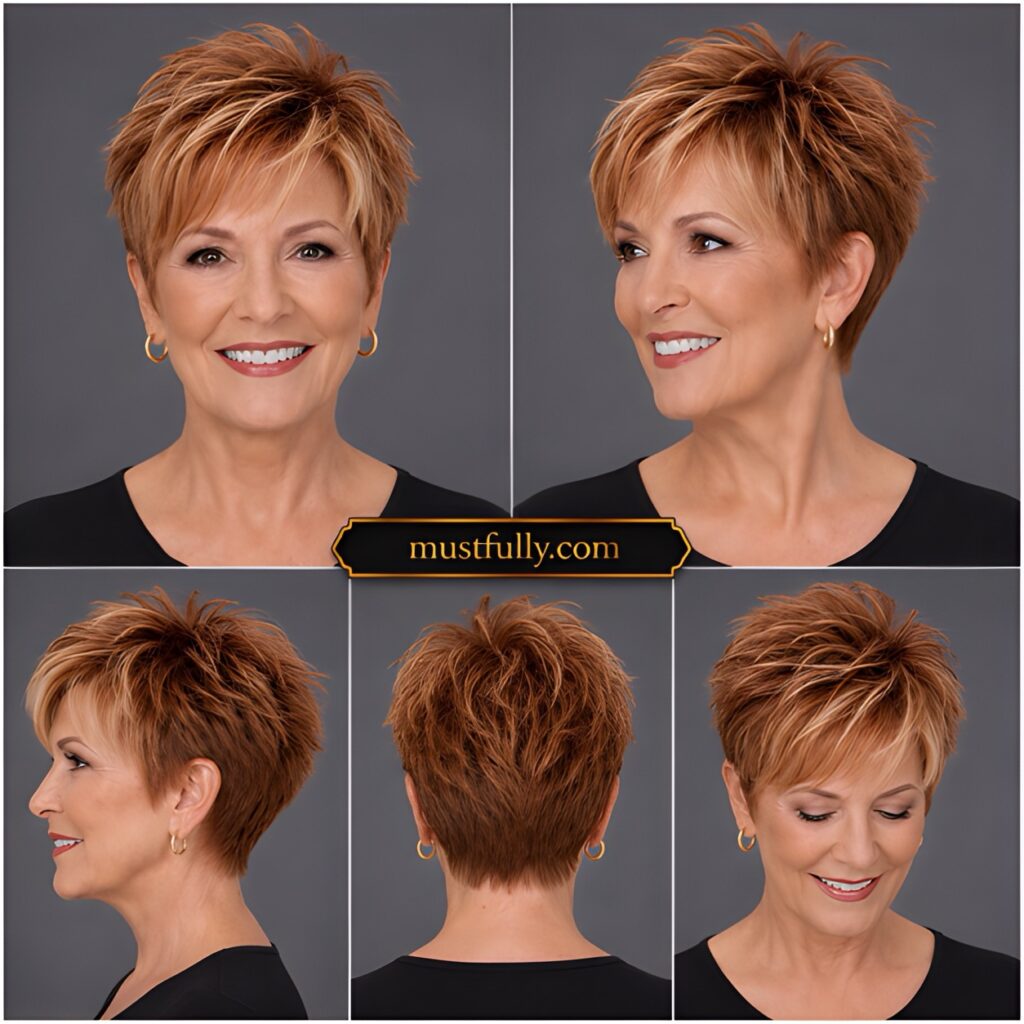
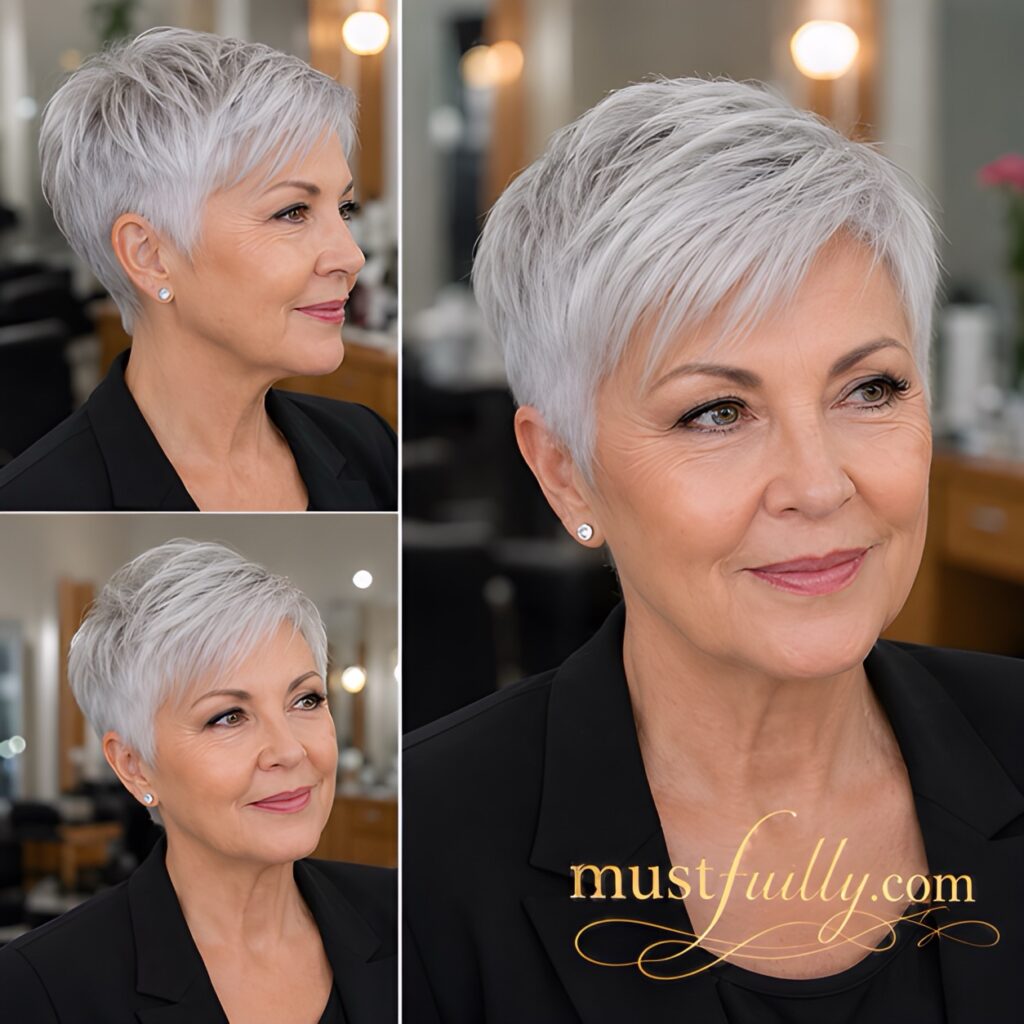
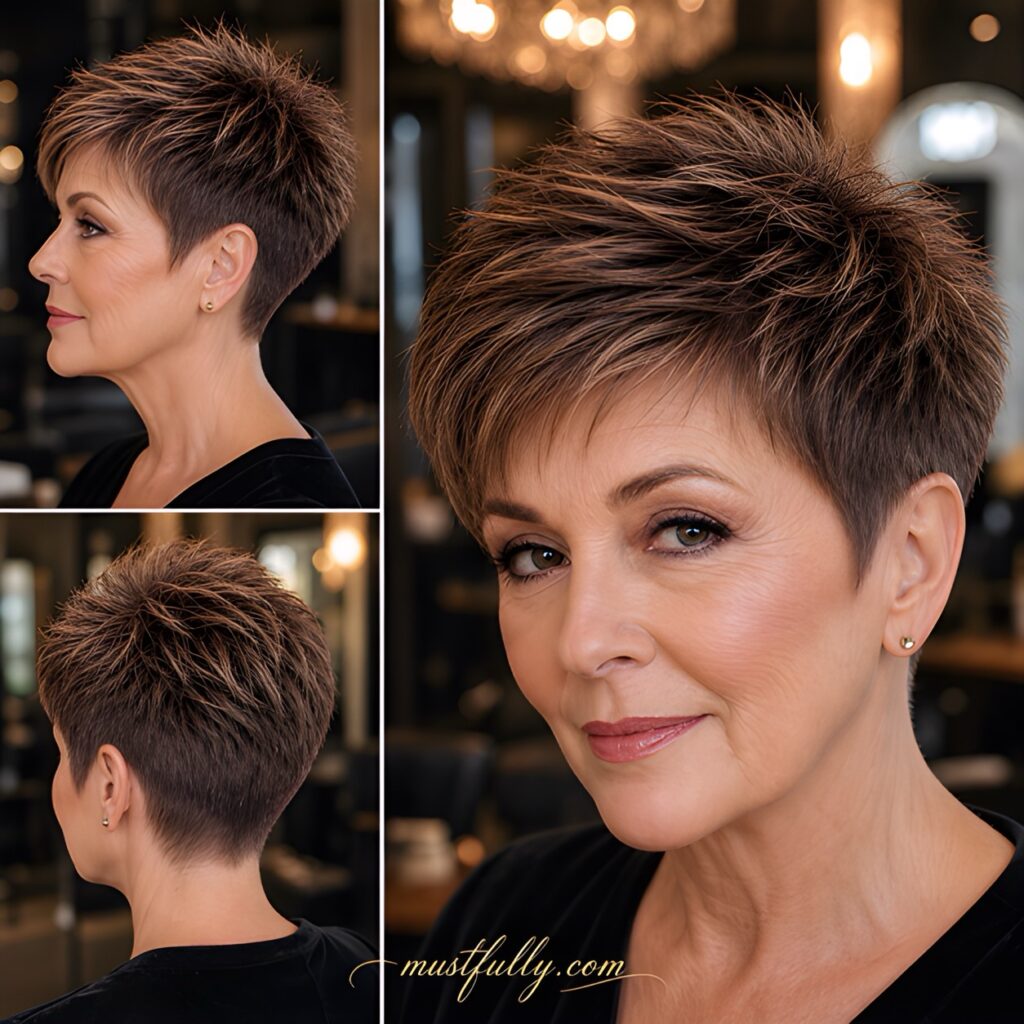
When you opt for a pixie cut, you are exposing more of your face and scalp than you likely did with longer styles. This means the color you choose has nowhere to hide. On longer hair, ombre or balayage techniques have room to breathe and transition slowly. On a pixie, the color impact is immediate and concentrated. For women over 50, hair texture often changes, becoming more porous or perhaps more wiry as pigment is lost. This change in “canvas” requires a more strategic approach to dye application. You want to avoid “flat” color—that monolithic, box-dye look that lacks dimension. Instead, the goal is to create depth at the roots and luminosity at the tips to mimic the way natural hair reflects light, giving the illusion of thickness and vitality.
Why Skin Tone is Your Ultimate Compass
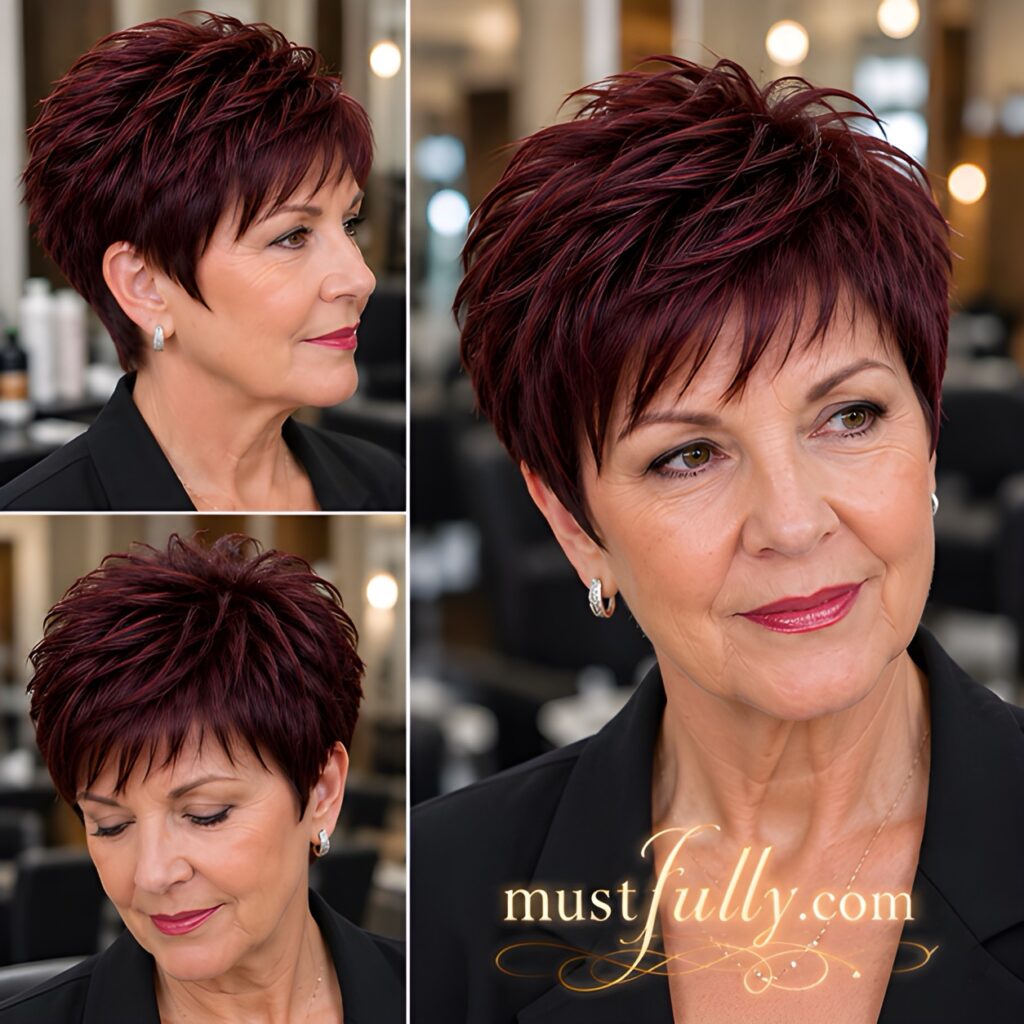
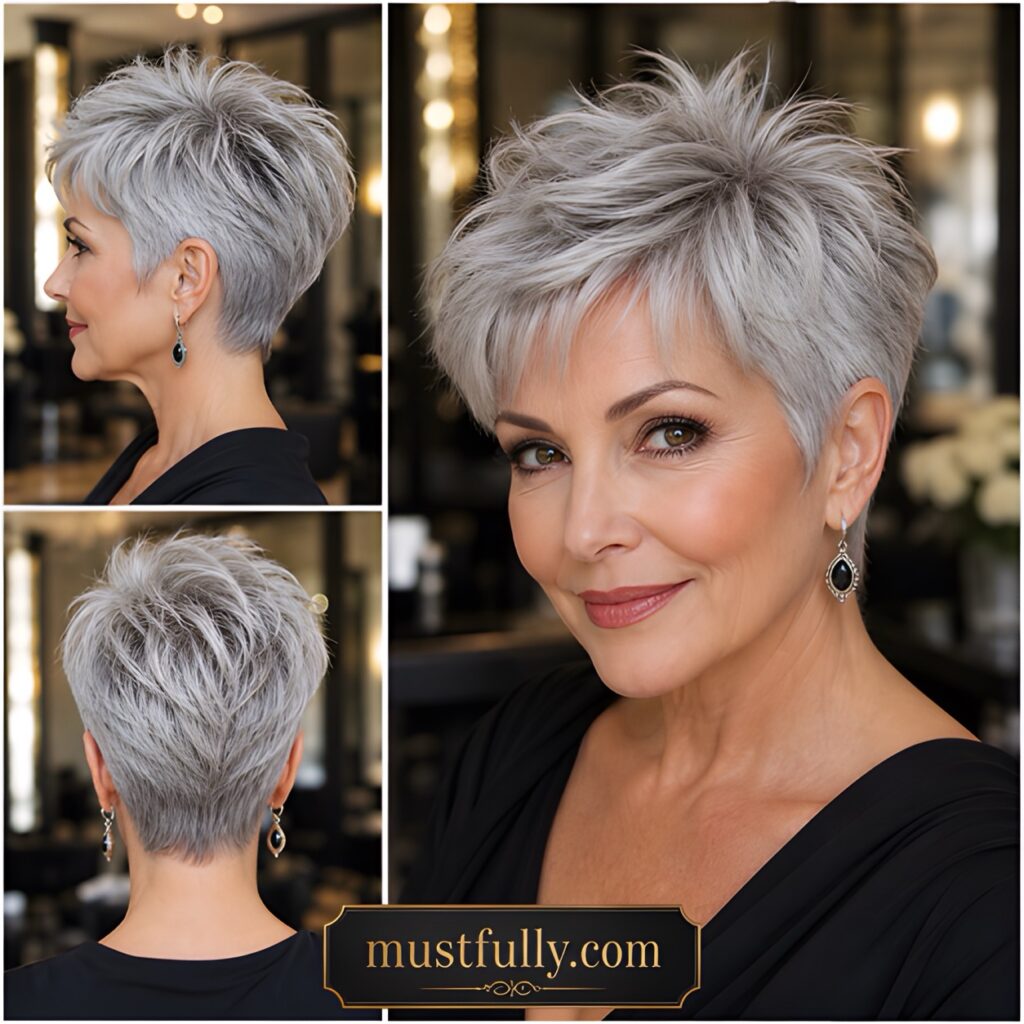
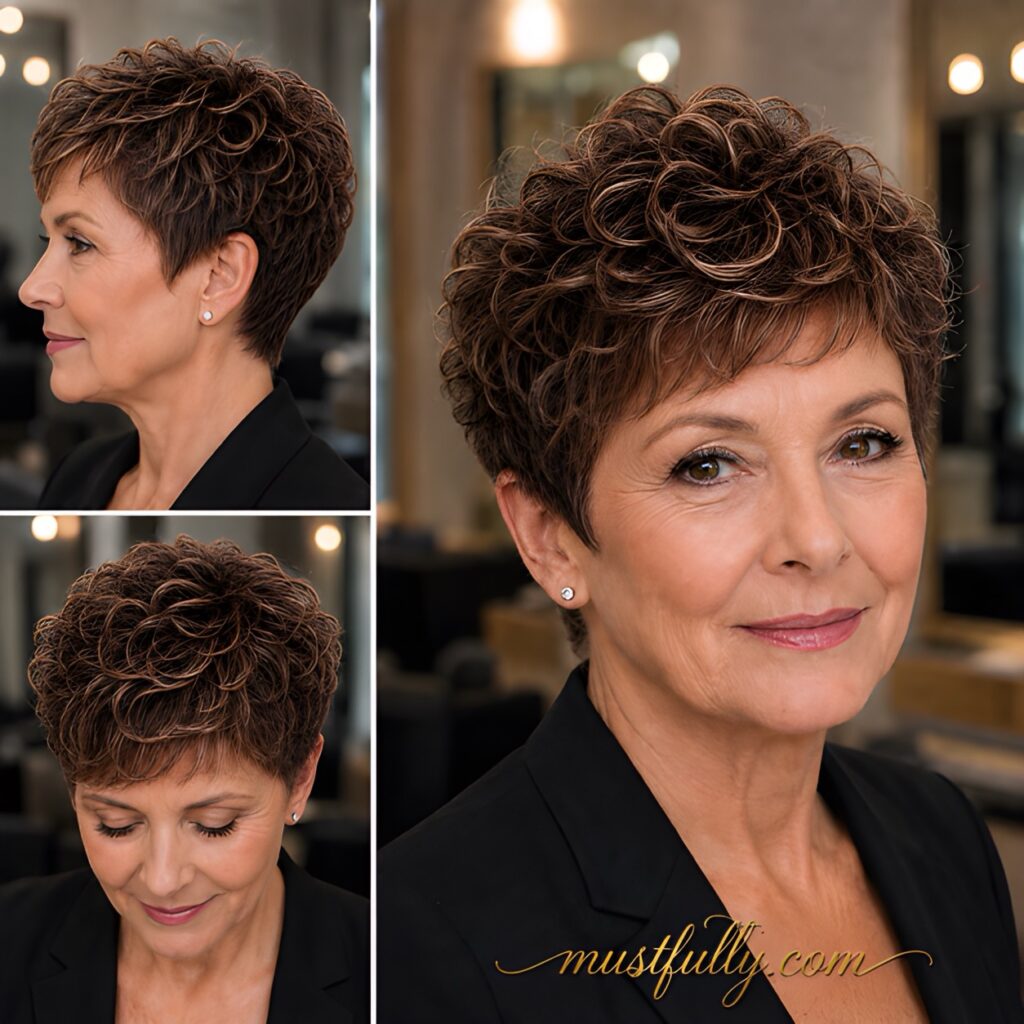
The golden rule of hair color, particularly as we mature, is to work with your skin’s undertones rather than against them. Our skin loses some of its natural pigment as we age, often becoming paler or developing more pronounced cool or warm undertones. A color that looked stunning on you at 30 might wash you out at 55. To find your undertone, look at the veins on your wrist: blue or purple usually indicates cool tones, while green suggests warm. If you see both, you are likely neutral. For cool-toned women, icy blondes, ash browns, and violet-based silvers work wonders. For warm-toned women, golden honeys, rich coppers, and creamy caramels provide a sun-kissed glow that softens the features.
The Power of the “Silver Fox” Transition
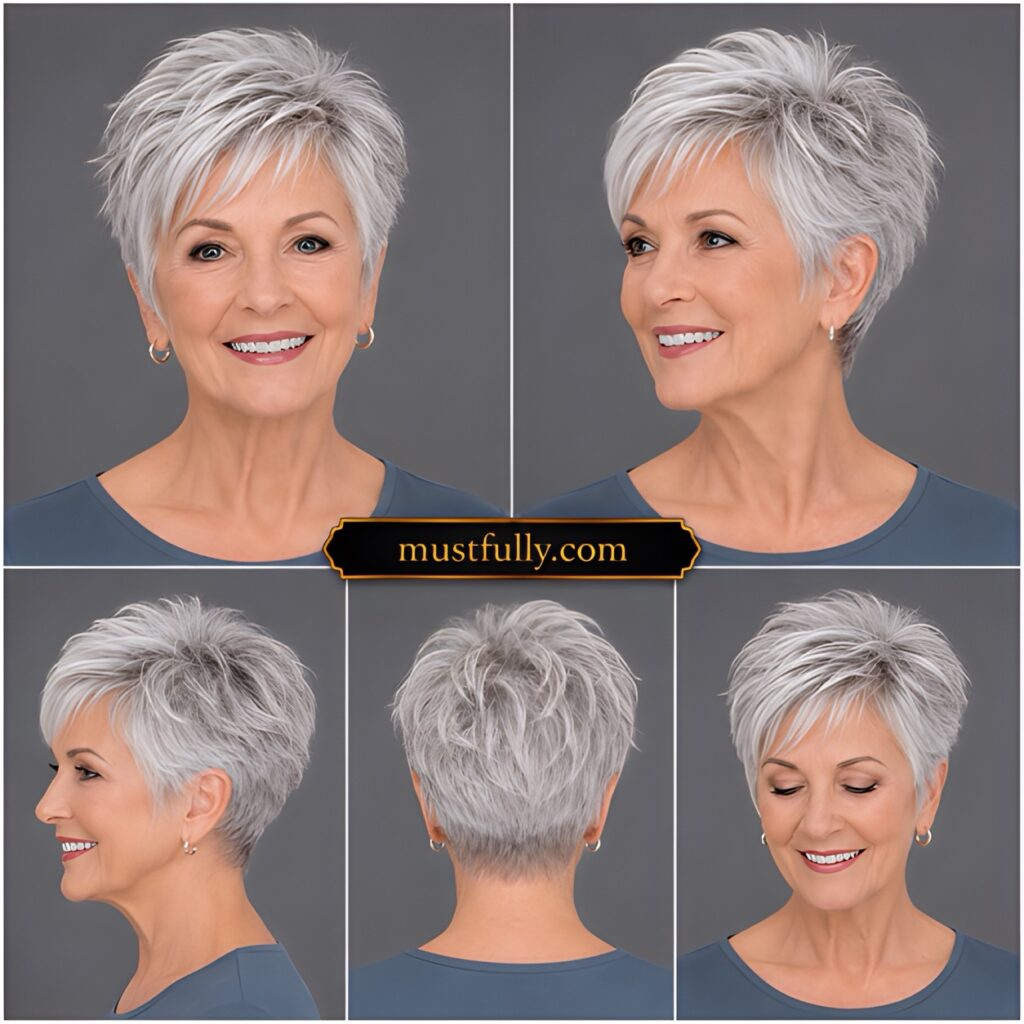
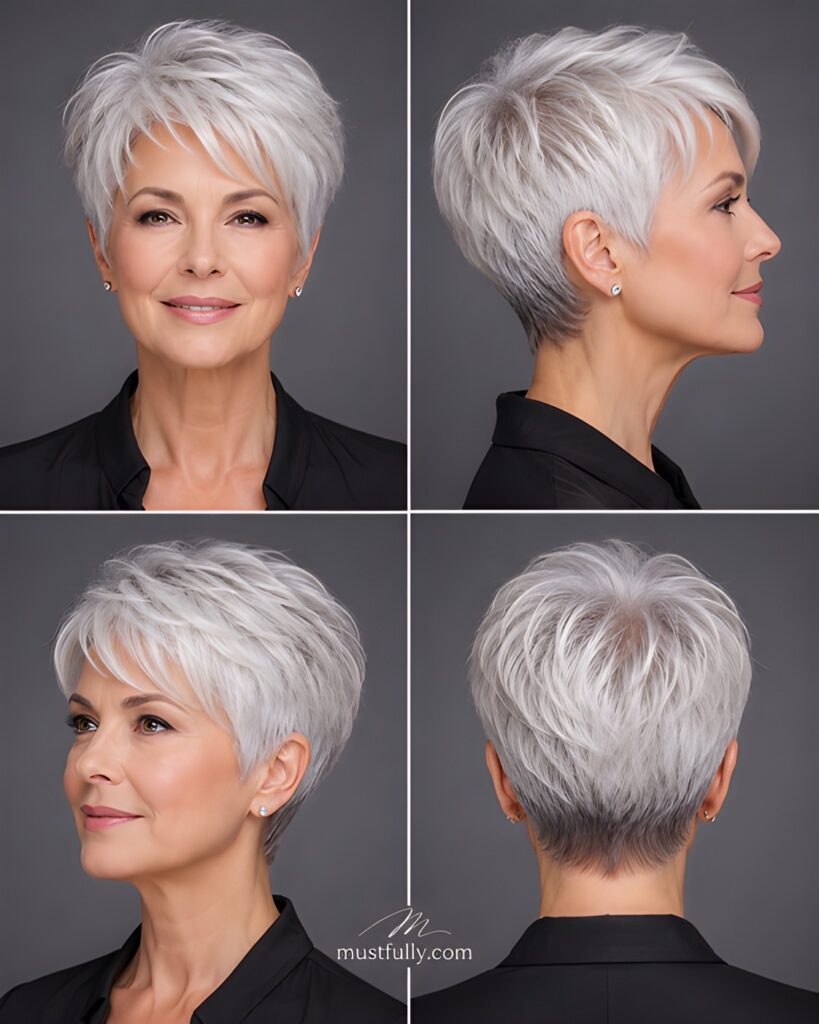
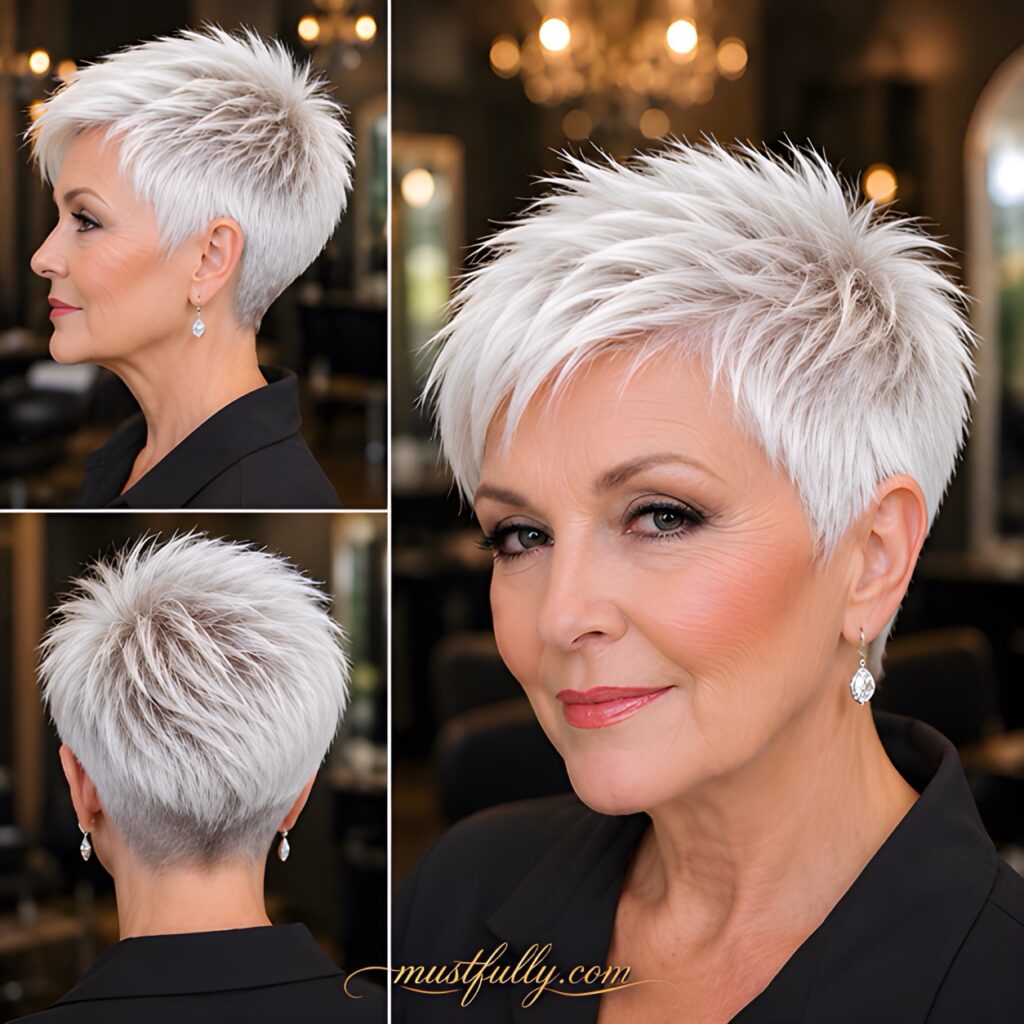
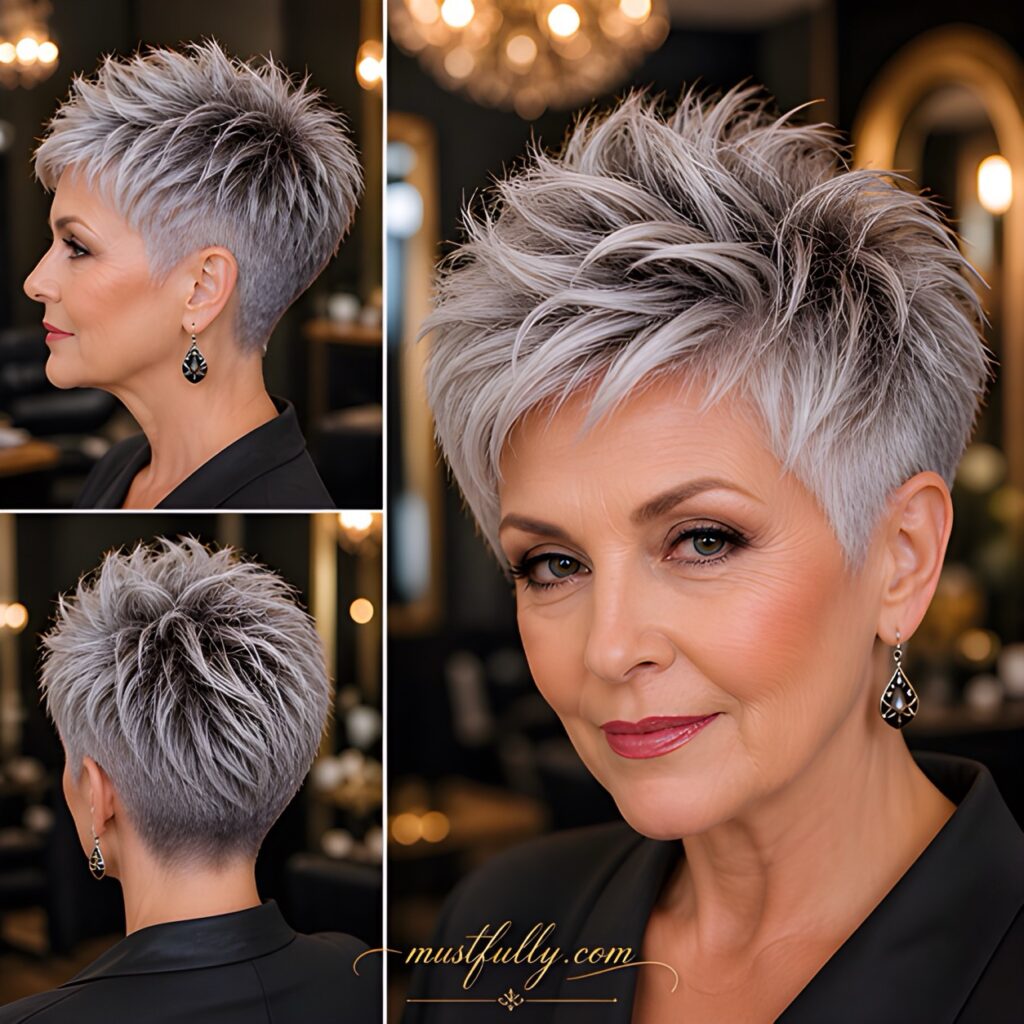
Embracing your natural gray is no longer seen as “letting yourself go”; it is a high-fashion choice that exudes elegance. A pixie cut is the single best way to transition to natural silver because it removes the “line of demarcation” much faster than long hair. However, natural gray can sometimes look dull or yellowed due to environmental pollutants or heat styling. To make a silver pixie truly shine, consider “gray blending” or “herringbone highlights.” This involves adding fine lowlights or highlights that mimic the natural pattern of your graying hair, creating a seamless, sophisticated look that requires very little maintenance and looks intentionally chic rather than accidental.
Enhancing Natural Grays with Gloss and Toning
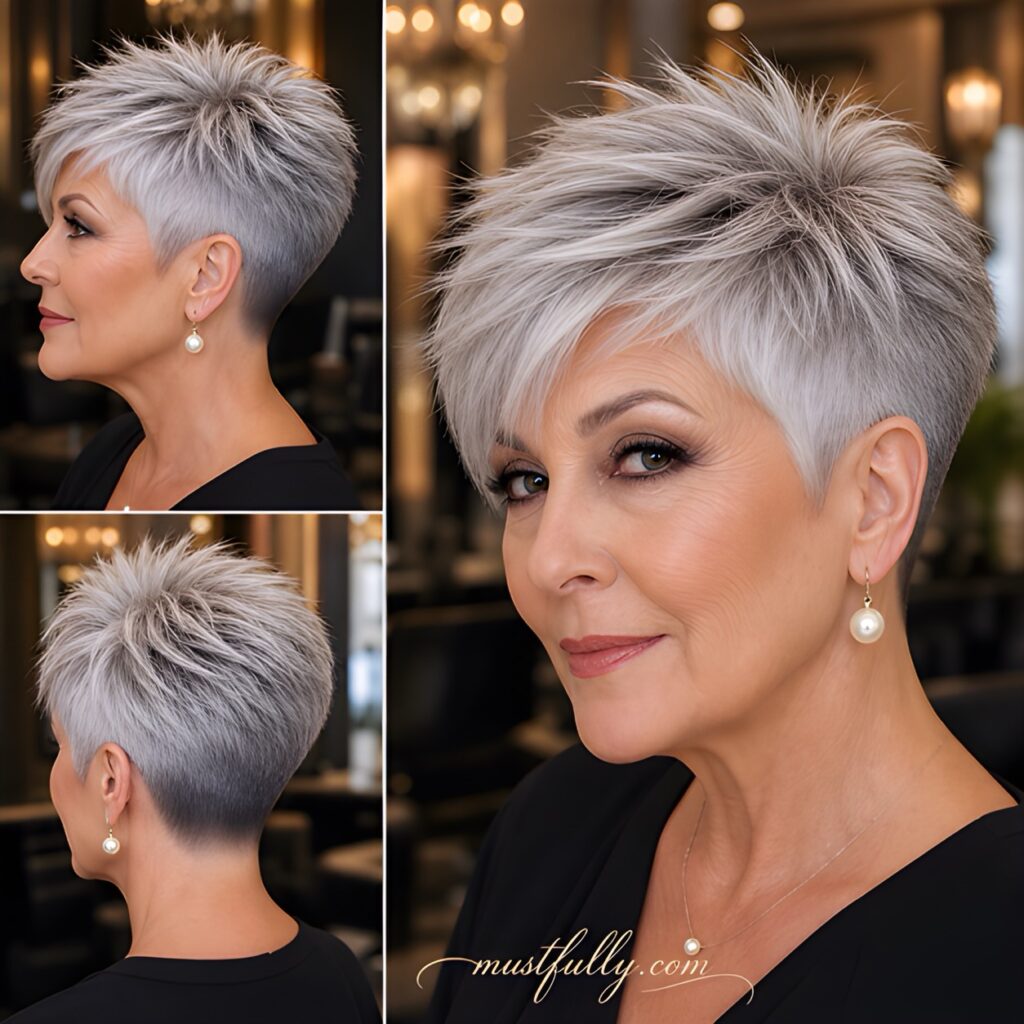
If you decide to go fully silver, the secret to looking “expensive” lies in the finish. Gray hair reflects light differently because it lacks a pigment core. Using purple-toned shampoos can neutralize yellow brassiness, but for a pixie cut, a professional clear gloss treatment every six weeks is a game-changer. This adds a layer of shine that makes the short layers look healthy and polished. Furthermore, adding a few “smoky” lowlights near the nape of the neck and around the ears can provide the necessary shadow to define the shape of the cut, preventing the hair from looking like a shapeless cloud of white.
Radiant Blondes: Adding Warmth and Volume
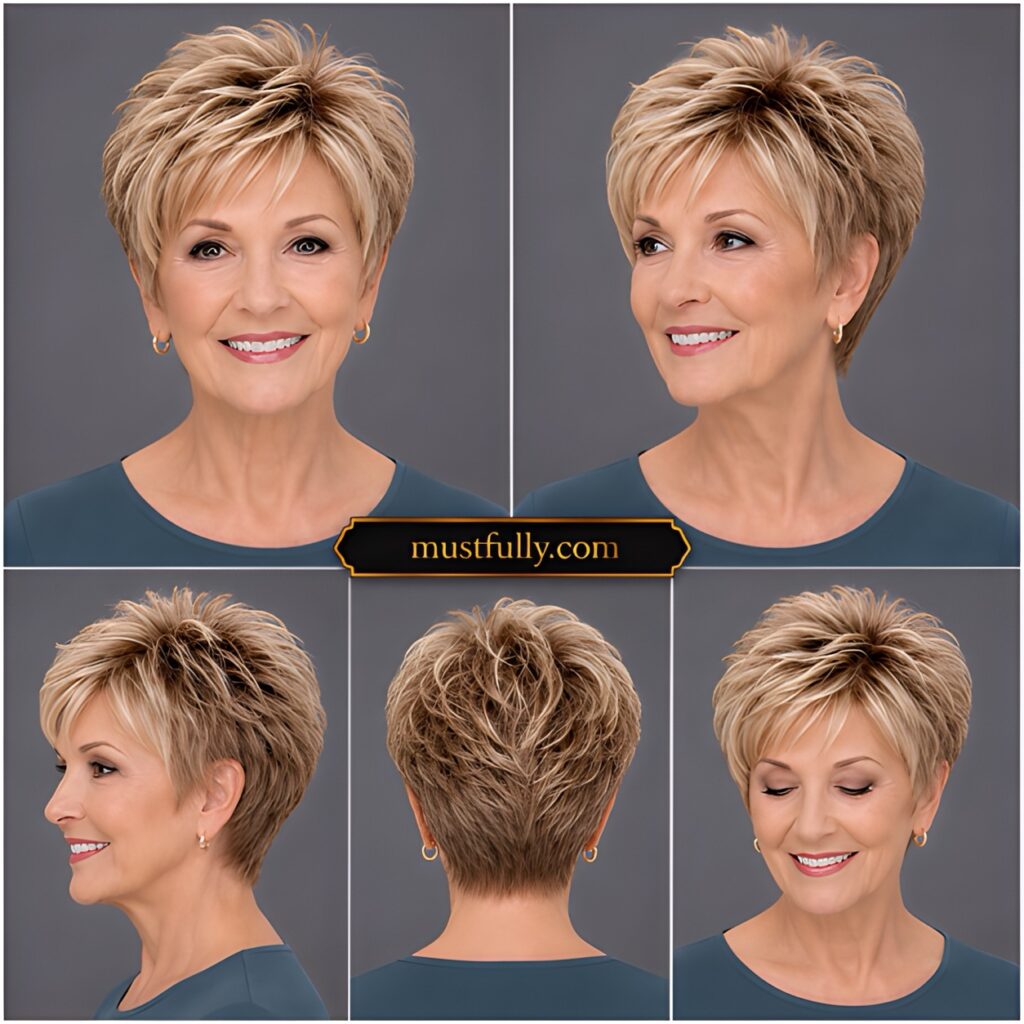
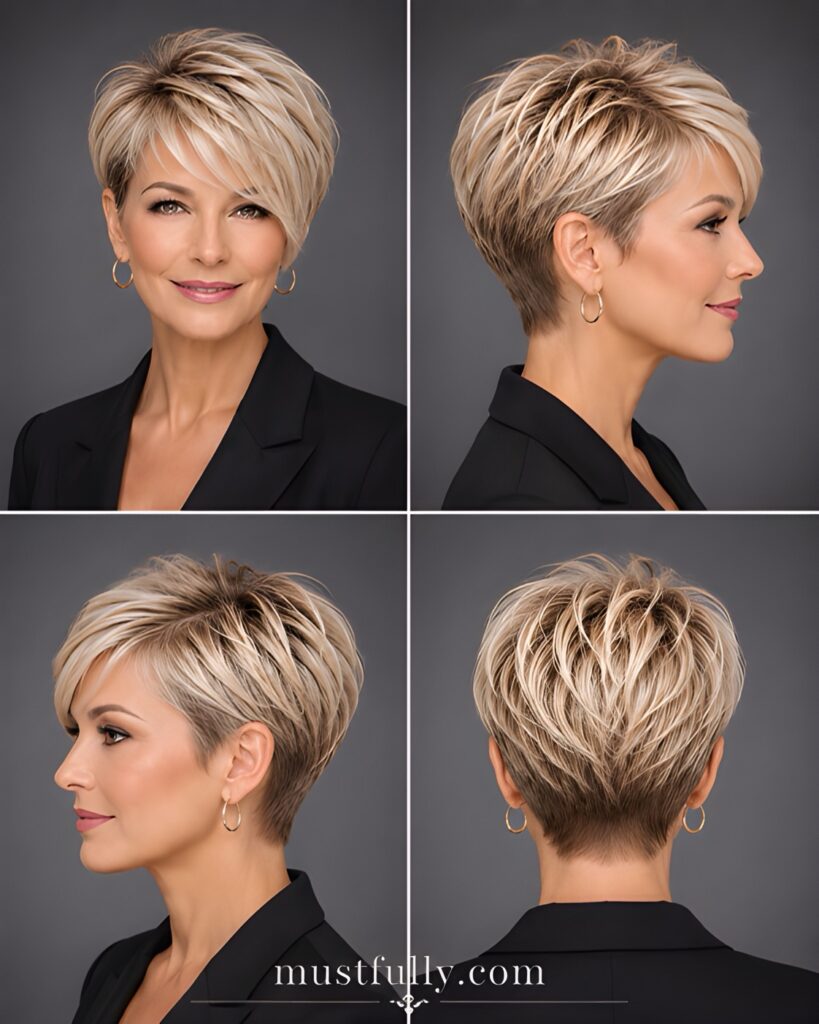
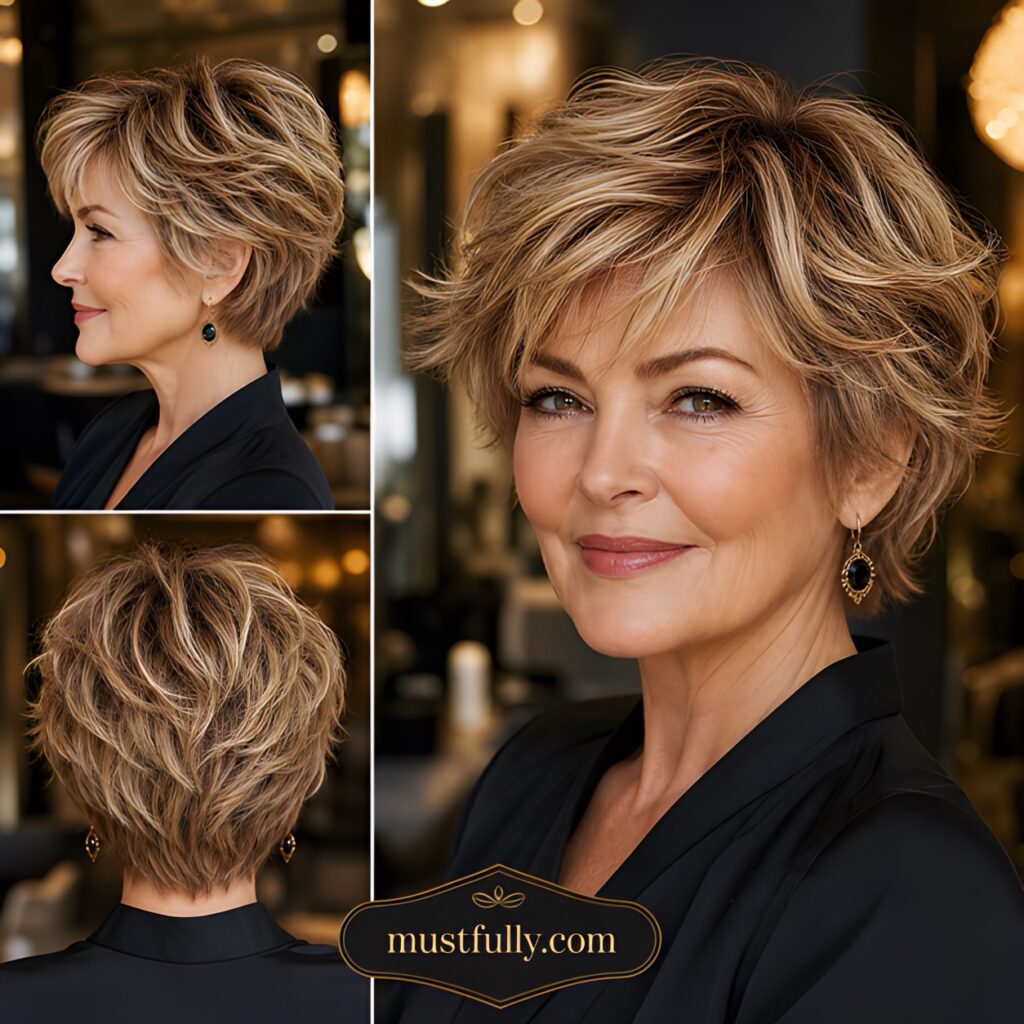
Blonde is a perennial favorite for women over 50 because it camouflages regrowth brilliantly. When white hairs start peeking through a blonde base, they look like natural highlights rather than a glaring stripe. For a pixie cut, avoid “platinum” unless you have the skin tone to support it, as it can be very harsh. Instead, look toward “expensive blonde” or “buttery champagne” shades. These warmer, creamier tones reflect light onto the cheeks and forehead, creating a soft-focus effect that minimizes the appearance of wrinkles.
The Dimension Factor: Highlights vs. Lowlights
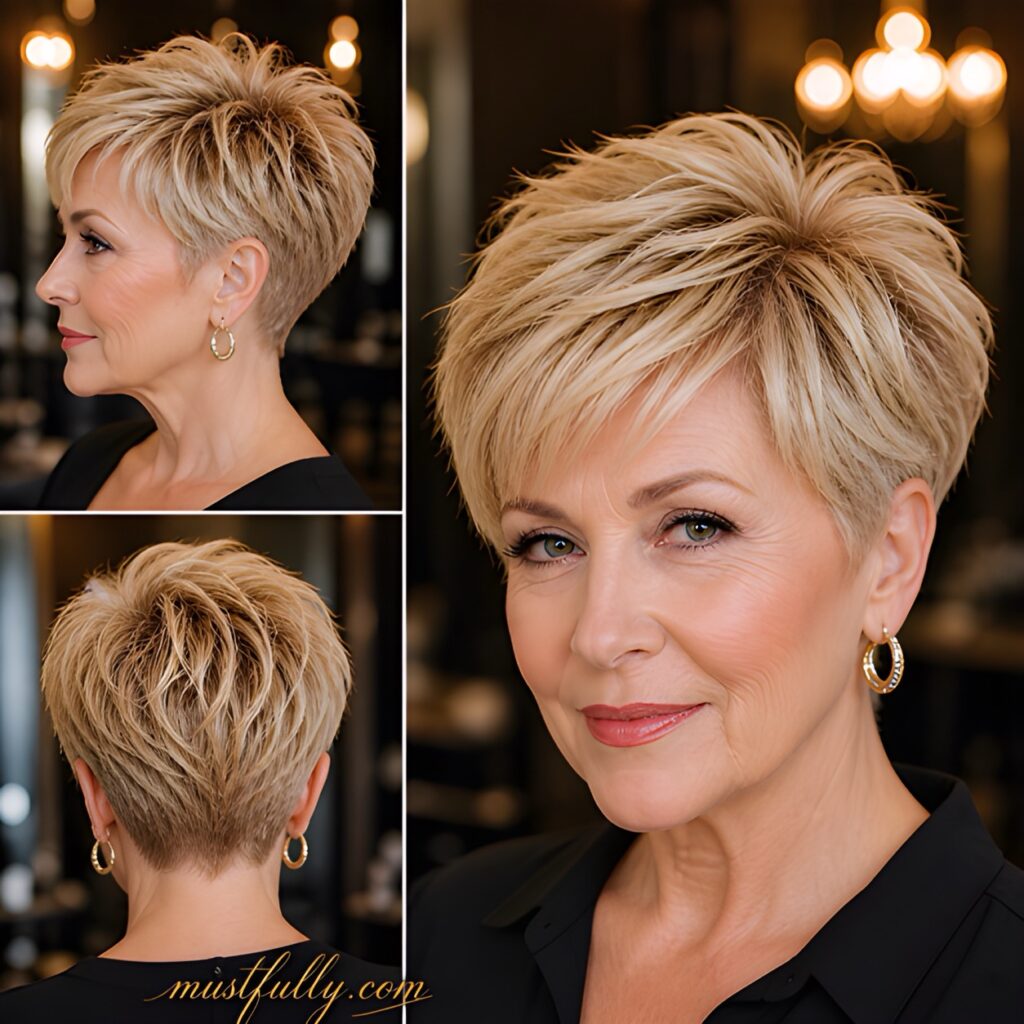
In a short cut, the placement of color is everything. If your pixie is quite short on the sides but longer on top (the classic “wedge” or “undercut” style), you can play with “foilyage” on the crown. By keeping the base color one shade darker than the highlights, you create a sense of height and volume. This is particularly effective for women experiencing thinning hair, as the dark roots provide the “shadow” of density, while the lighter tips draw the eye upward and outward, giving the hair a fuller, more textured appearance.
Bold Brunettes: Richness Without the Weight
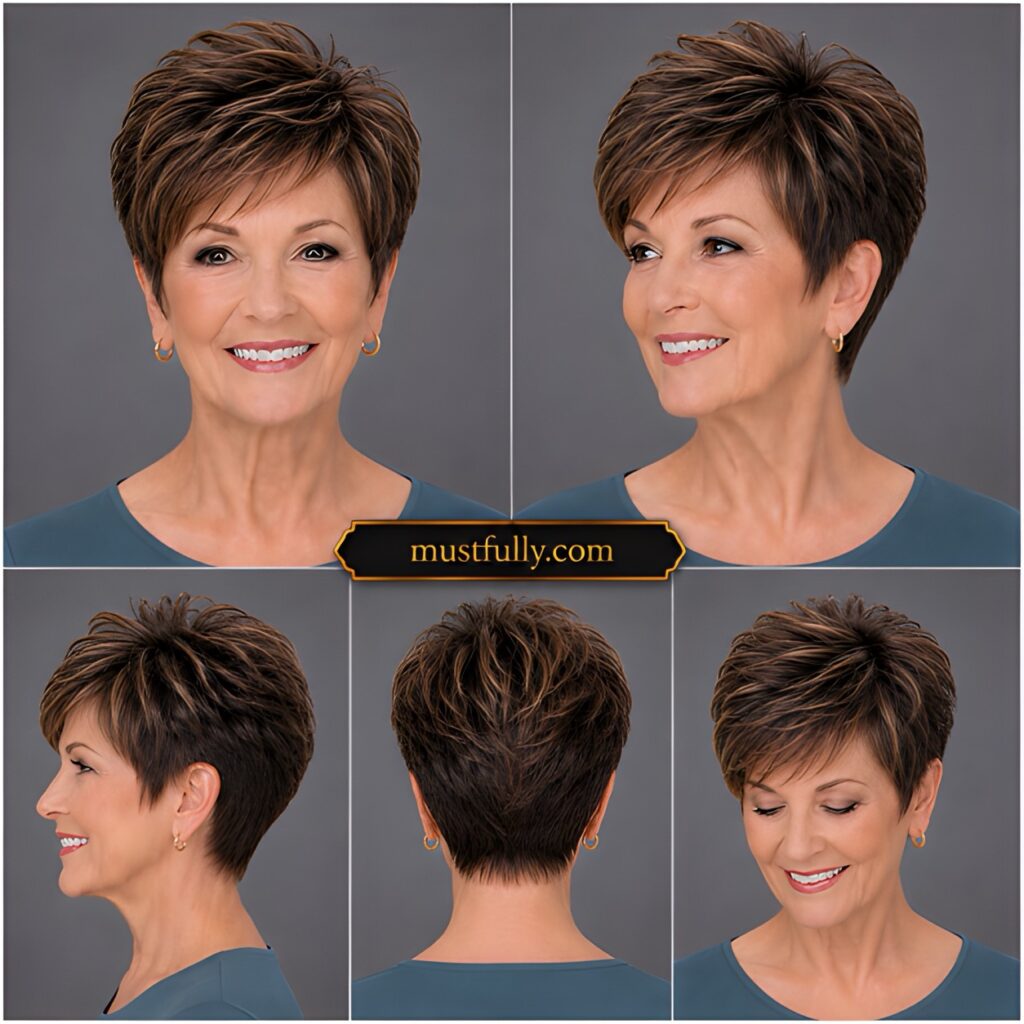
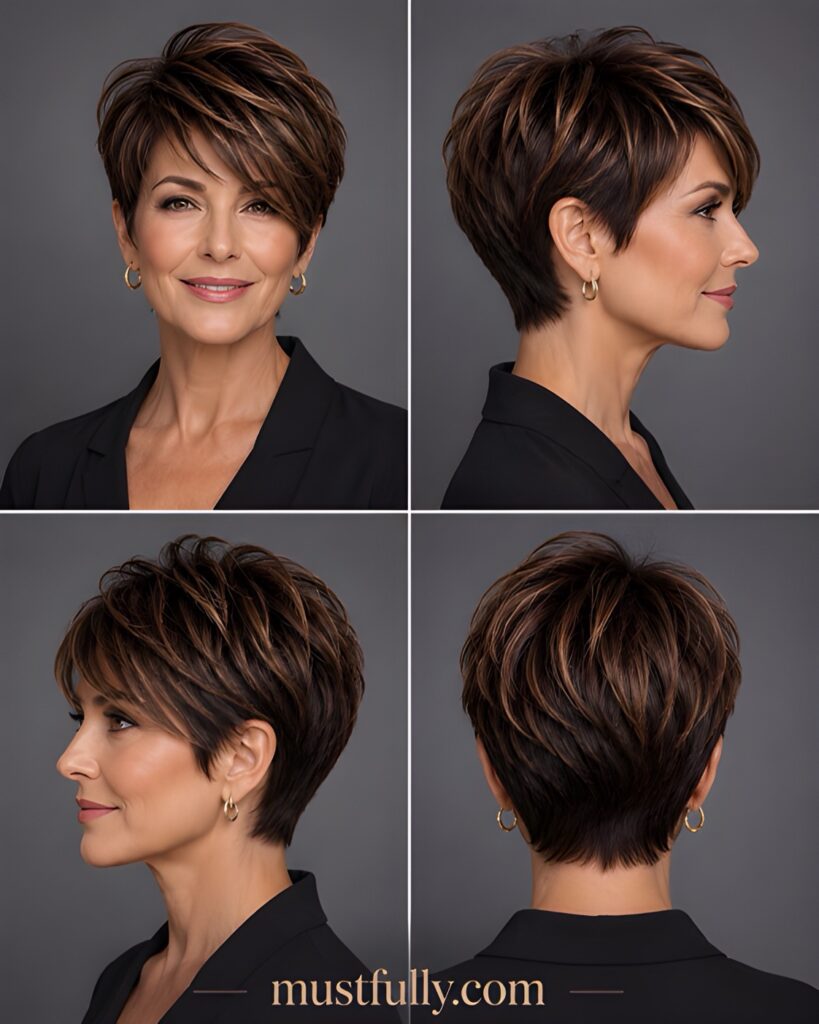
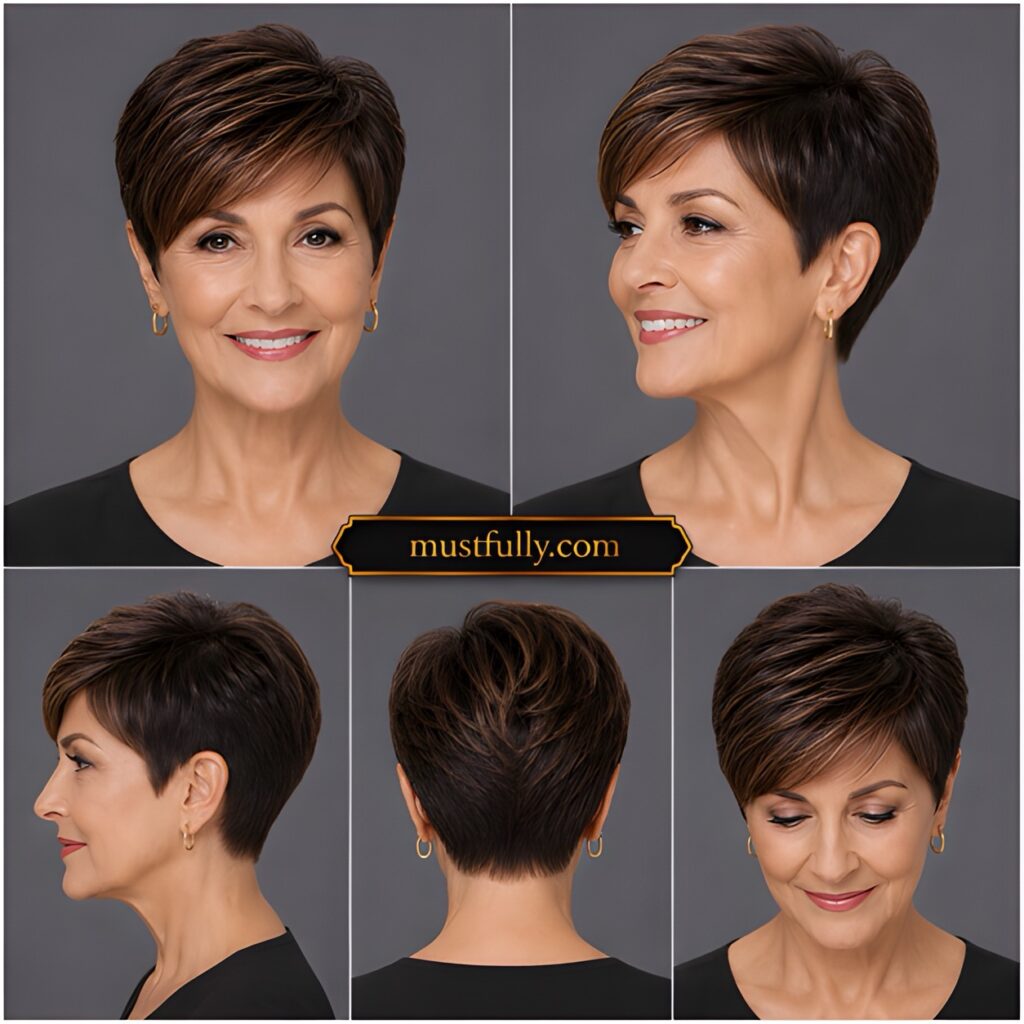
Many women over 50 fear that dark hair will make them look older, and while a flat, jet-black can be aging, a rich, multi-dimensional brunette is incredibly striking. The key is to avoid “solid” colors. If you love dark hair, aim for shades of mocha, dark chocolate, or chestnut. For a pixie, a “root smudge” technique is ideal. By keeping the roots a bit deeper and subtly lightening the ends of the short layers, you maintain the richness of being a brunette while ensuring the face is framed by softer, more forgiving tones.
Avoiding the “Helmet” Effect
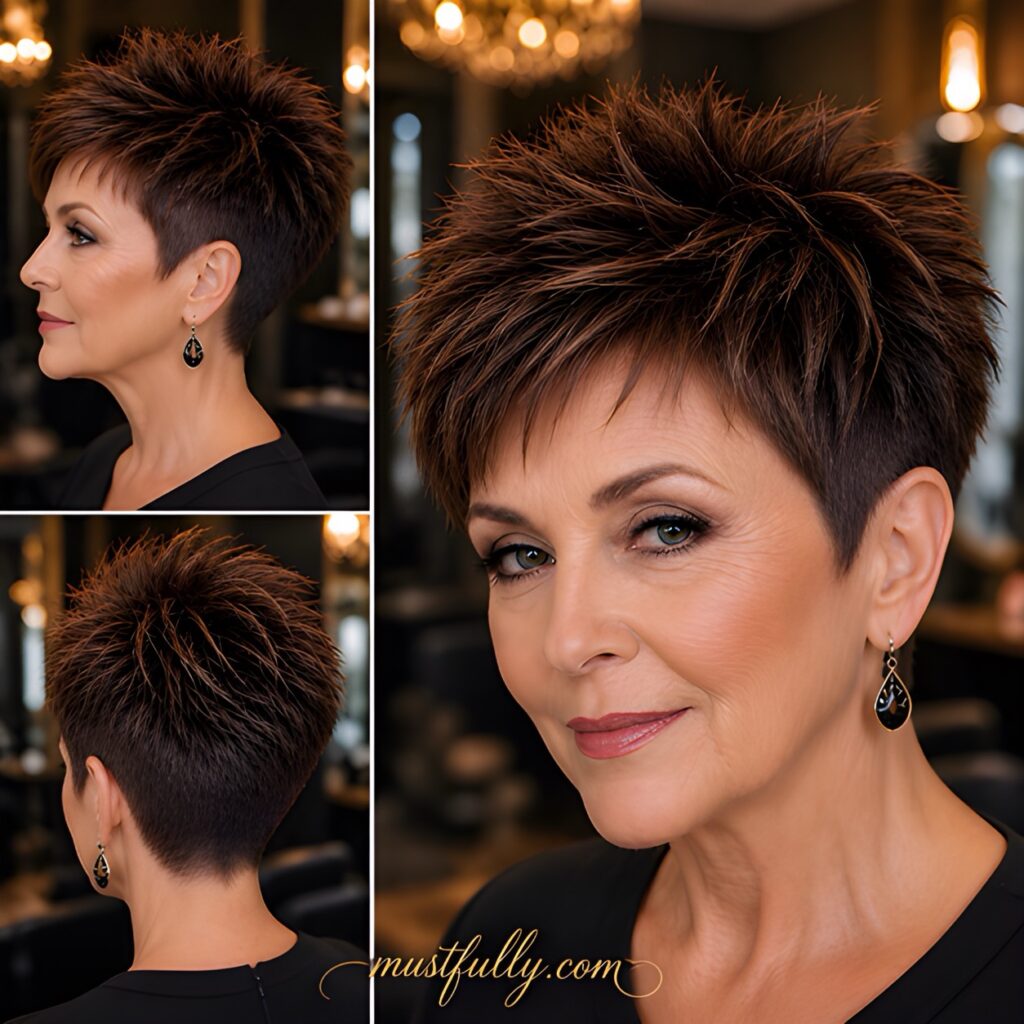
One risk with dark hair and a pixie cut is the “helmet” look—where the hair looks like a single, solid piece of plastic. To combat this, your stylist should use a “shattered” coloring technique. This involves painting different levels of the same color family throughout the hair. For example, mixing a medium ash brown with hints of walnut. This creates movement within the short layers, allowing the architectural lines of your pixie cut to be visible. When you move your head, the light should catch different ribbons of color, making the style feel airy and modern.
Red and Copper: The Ultimate Personality Statement
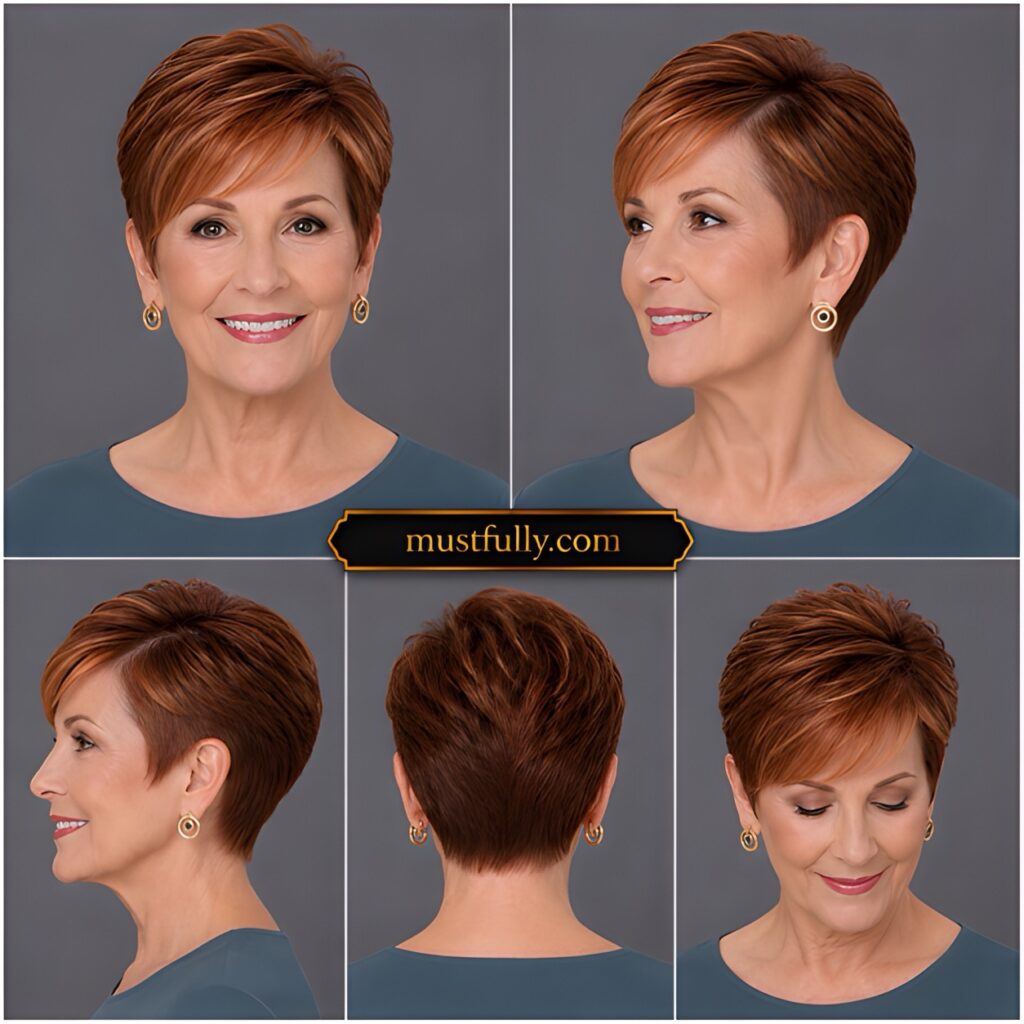
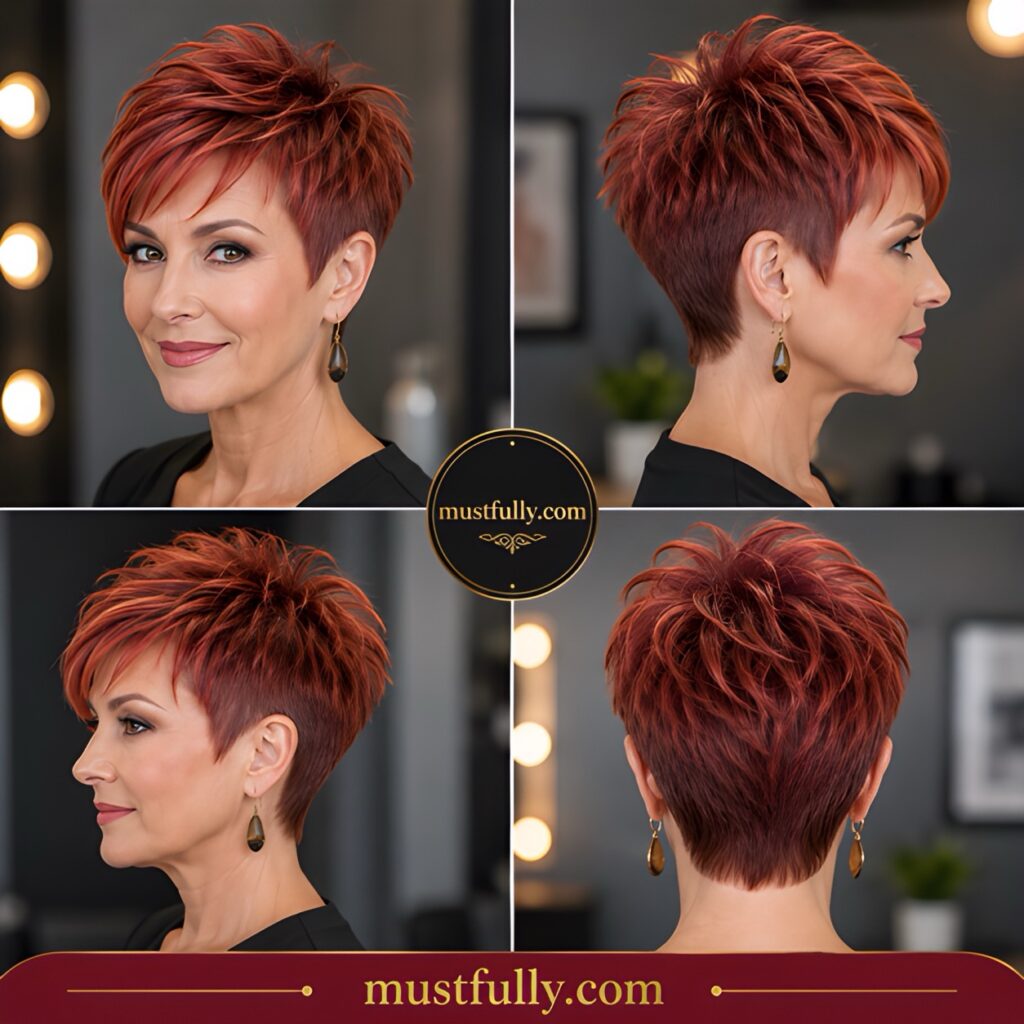
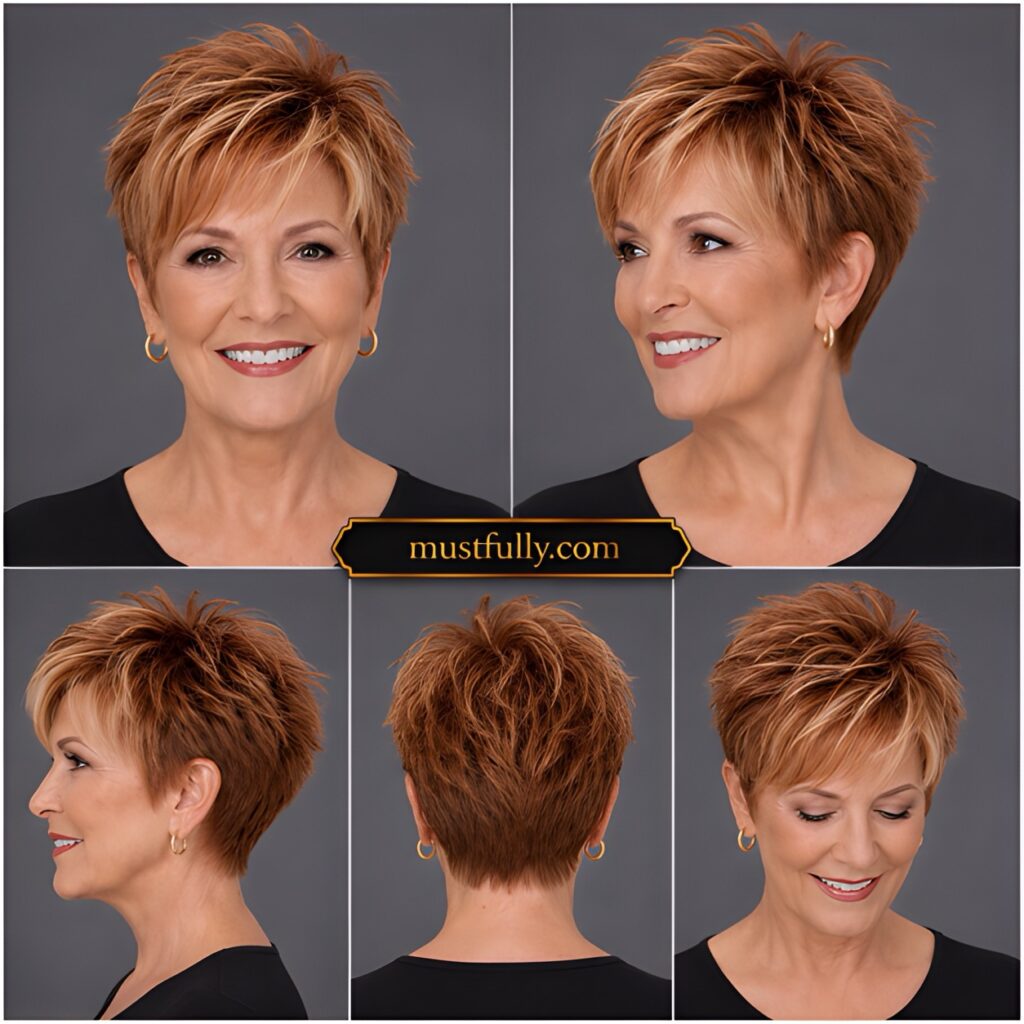
Red hair on a woman over 50 is a sign of a vibrant, fiery spirit. From soft strawberry blondes to deep auburns, red can be incredibly flattering as it brings a “flush” of color to the skin. However, red is also the fastest color to fade, and on a pixie cut, fading can be quite obvious. If you choose this route, be prepared for a bit more maintenance. Coppers are particularly beautiful for those with green or blue eyes, as the contrast makes the eye color pop. For a more subtle take, consider a “rose gold” tint over a blonde or gray base, which provides a modern, whimsical feel without the commitment of a bright crimson.
Maintenance and Vibrancy for Red Tones
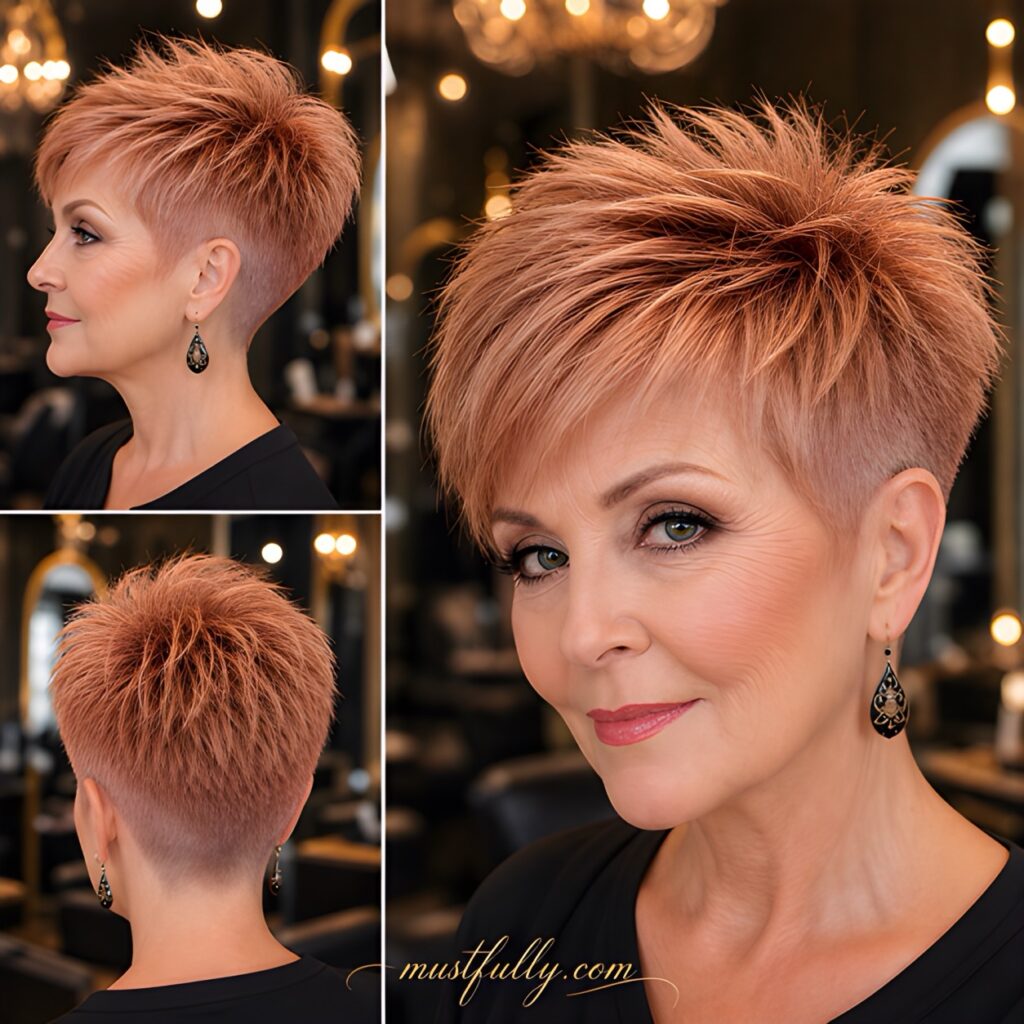
Because short hair is cut frequently, you have the advantage of keeping your ends fresh, which helps red pigment stay locked in. To maintain the “exclusive” look of your red pixie, use sulfate-free products and consider a color-depositing conditioner once a week. This ensures that the vibrancy remains consistent from the day you leave the salon until your next trim, keeping your look intentional and sharp.
The Architectural Influence: How Your Cut Dictates Your Color
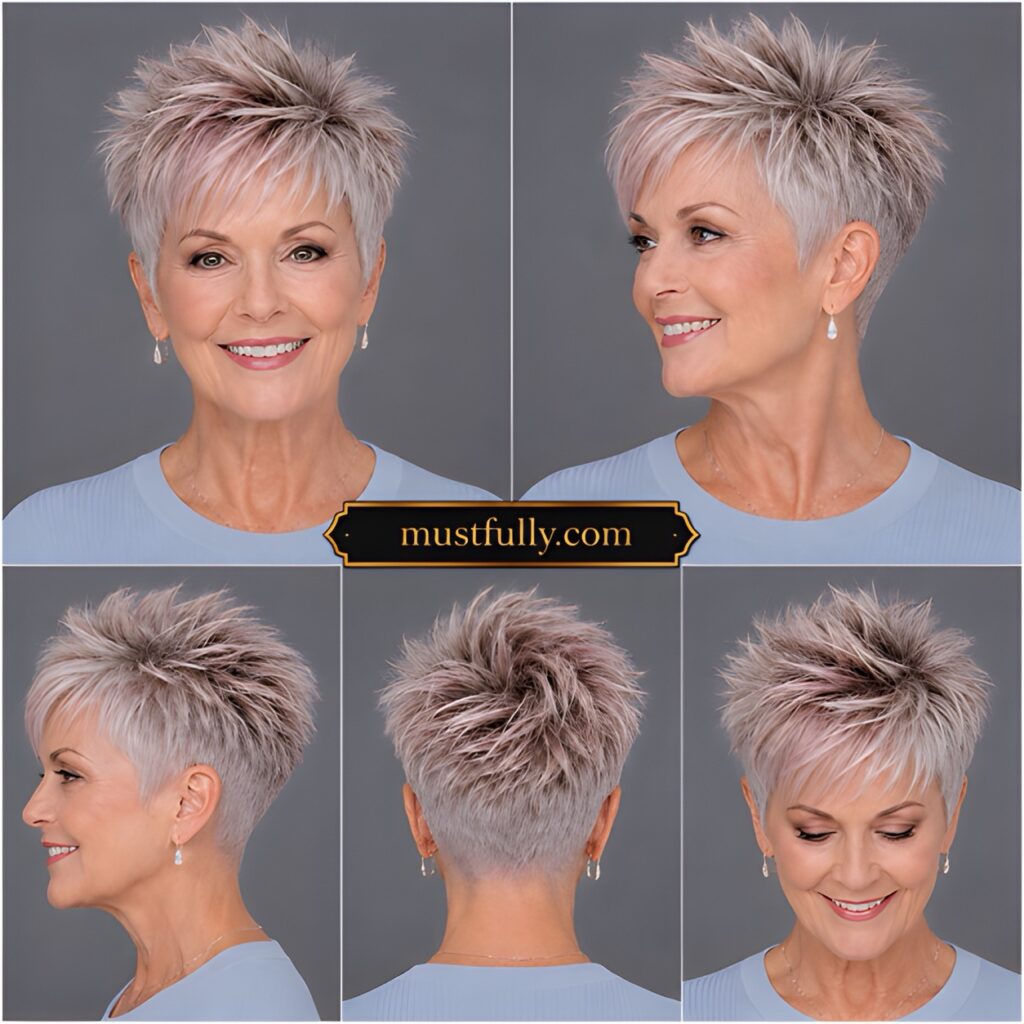
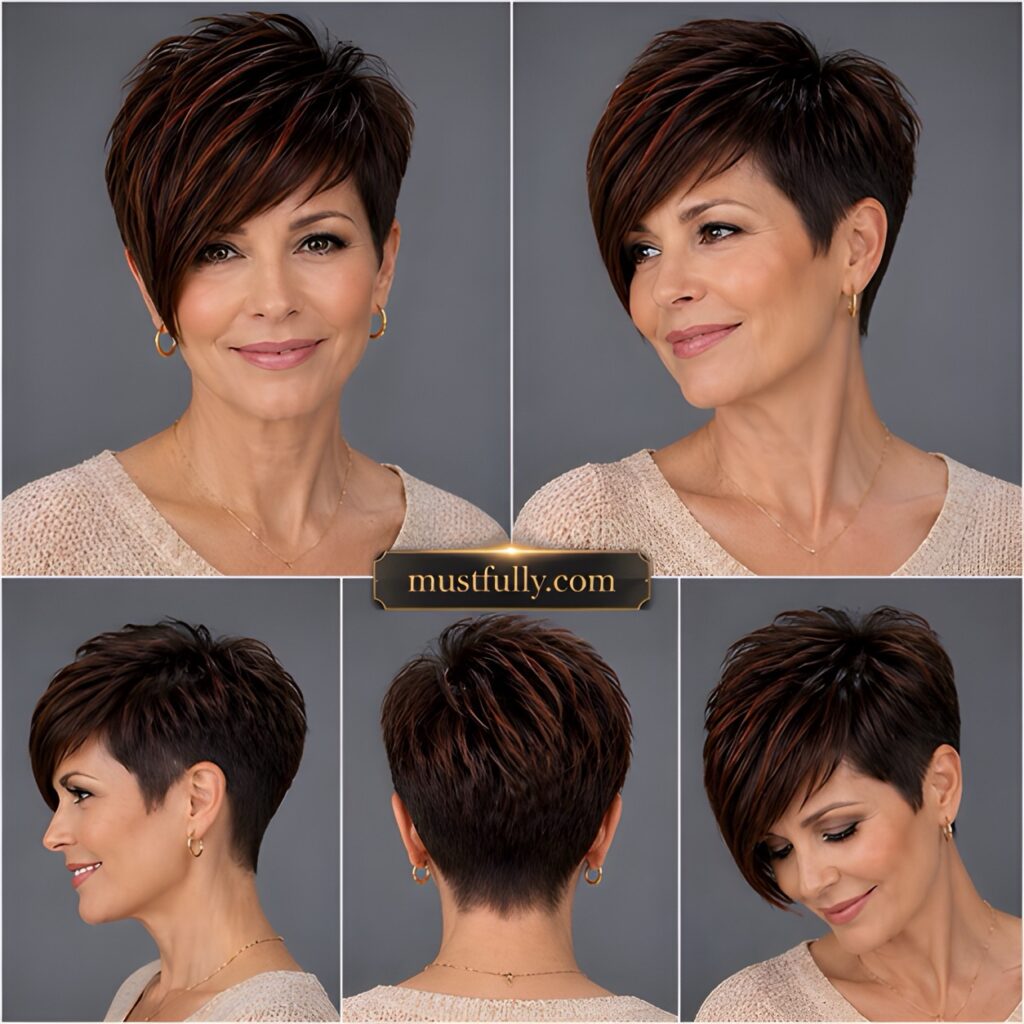
Not all pixies are created equal. A “shaggy pixie” with lots of texture requires a different color approach than a “sleek, architectural pixie.” For a shaggy, layered look, “color melting” is your best friend. This technique blends the colors so seamlessly that you can’t tell where one ends and the other begins, emphasizing the “messy-chic” vibe. For a more structured, Audrey Hepburn-style pixie, a more uniform color with subtle “internal” highlights works better to showcase the clean lines and precision of the cut.
Framing the Face with “Money Pieces”
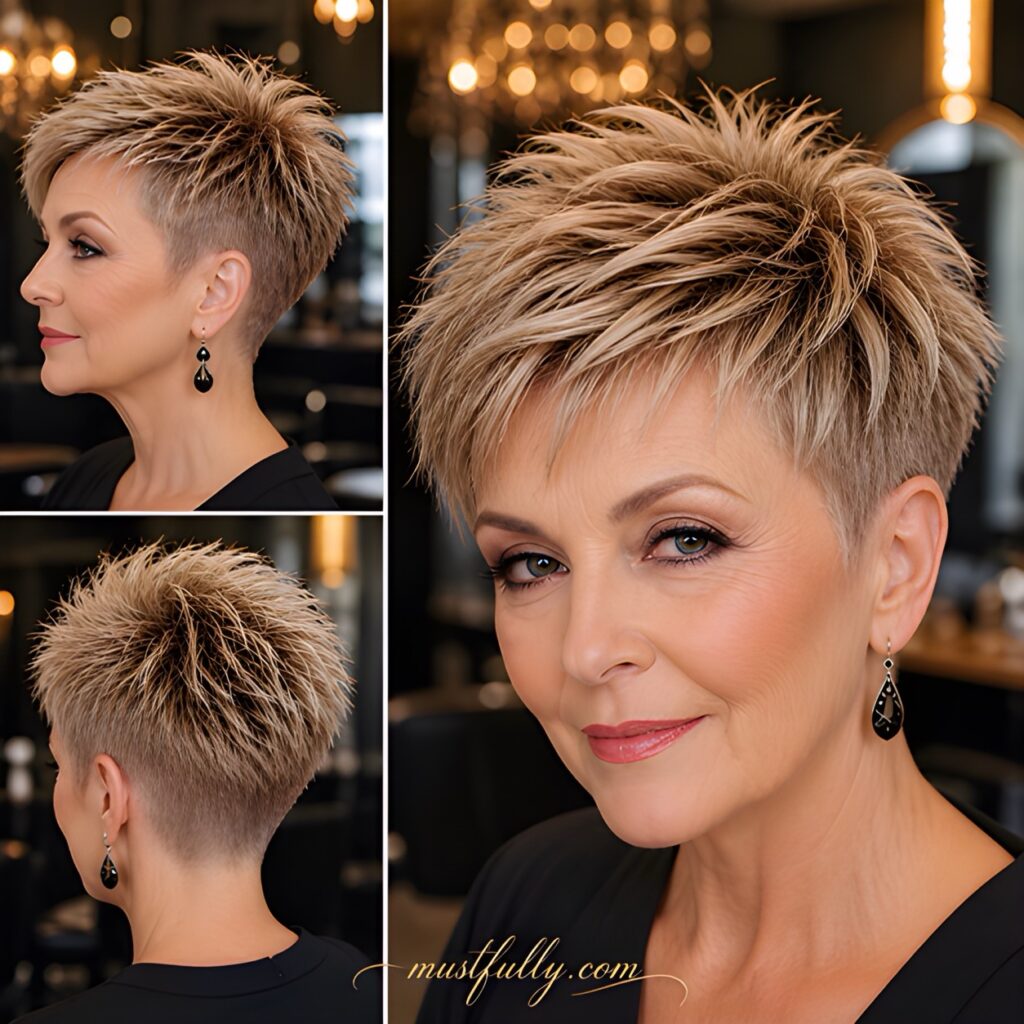
Even with a very short cut, you can utilize the “money piece” trend. This involves placing slightly lighter or more vibrant tones right at the hairline or on the bangs. For women over 50, this is a strategic move to draw attention to the eyes and cheekbones. If you have a side-swept fringe, adding a few lighter ribbons through the bangs can brighten your entire facial structure, acting almost like a highlighter would in a makeup routine.
Scalp Health and Thinning Hair Considerations
As we age, our scalp health becomes more vital, especially when we are applying chemicals to it. A pixie cut puts your scalp on display, so it’s important to choose hair color products that are gentle. Ammonia-free dyes or oil-based delivery systems are better for maintaining the integrity of the hair follicle. If you are dealing with thinning areas, avoid very dark colors against a light scalp, as the contrast will make the thinning more apparent. Instead, go for mid-tone shades that bridge the gap between the scalp color and the hair color, creating a more uniform and dense look.
More styles for every look — tap here 👇
The Role of Professional Consultations
While DIY kits are tempting, a pixie cut is a precision style that deserves professional color. A stylist can see the back of your head—something you can’t do—and ensure the color is balanced. They can also perform “perimeter coloring,” where the tiny hairs around the ears and nape are colored with a lower volume developer to prevent irritation and ensure every millimeter of your cut is perfect.
Conclusion: Confidence is the Best Color
Ultimately, the best color for your pixie cut is the one that makes you feel like the most authentic version of yourself. Whether you choose to embrace your natural silver, go for a sun-kissed blonde, or make a splash with a vibrant copper, the pixie cut is your canvas. For women over 50, this hairstyle is a celebration of experience, beauty, and the freedom to define oneself on one’s own terms. By considering your skin tone, hair texture, and the specific architecture of your cut, you can achieve a look that is not only “age-appropriate” but truly age-defying. Walk into your next salon appointment with the knowledge that your hair is a reflection of your inner light—make sure it’s a shade that shines as bright as you do.